


Regenerative medicine and cell therapy research from Argentina.
The scientific development behind the Moviglia Method is supported by more than 20 years of research and publications in journals such as Science Advances and Journal of Neurorestoratology. LYRACELL continues that path through a translational medicine approach that integrates basic research, protocol development, clinical practice and outcome evaluation.
20+ years of researchPublications in journals such as Science Advances and Journal of NeurorestoratologyMoviglia MethodBuenos Aires

Understanding how cells communicate to guide tissue repair.
Dr. Gustavo Moviglia’s work began with the study of interaction and cooperation between different cells within tissues. That line of research made it possible to understand how immune system cells can guide stem cells to become the type of cell each tissue needs.
Building on that scientific work, protocols were developed to guide the cell preparation according to the tissue being treated. This is the scientific basis of the Moviglia Method and one of the main lines that continues to evolve at LYRACELL.
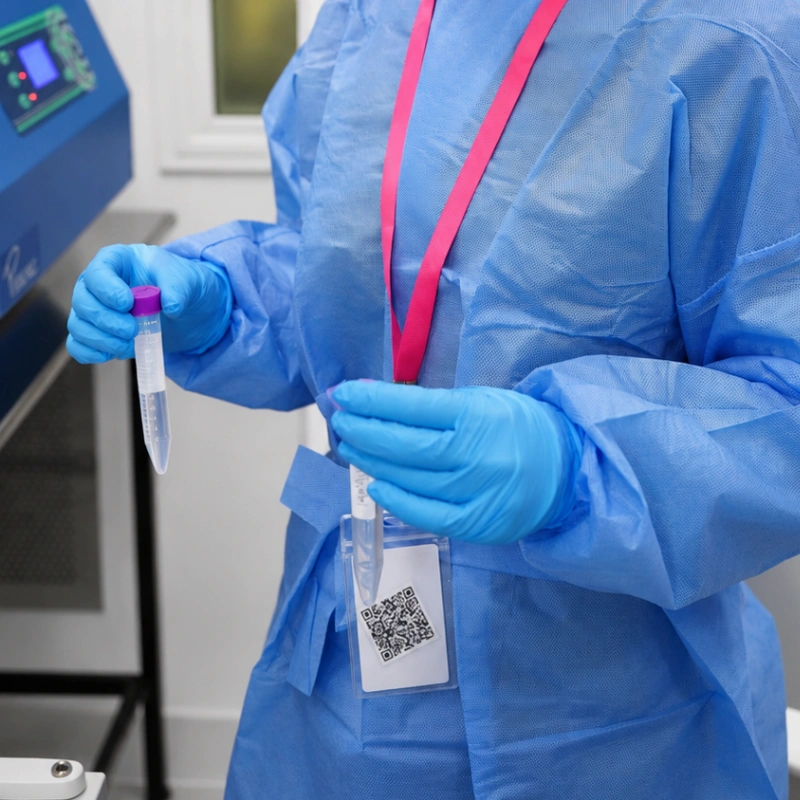
Research, develop, apply, measure and research again.
Translational medicine seeks to carry the knowledge generated in the laboratory into evaluation in clinical practice.
At LYRACELL, scientific research guides protocol development; clinical practice provides information and new questions; and those questions return to research to review or refine the approach.
This process allows research and clinical practice to continuously inform each other.
A path built through different stages.
The research linked to the Moviglia Method includes work on immunology, cell interaction, pre-differentiation and applications in different tissues and conditions.
Over time, the techniques for collection, processing, preparation and application have been developed and refined. New ways of measuring the clinical, functional and biological response have also been incorporated.
This track record has made it possible to build knowledge and clinical experience over time. It does not represent a guarantee of results for all patients.
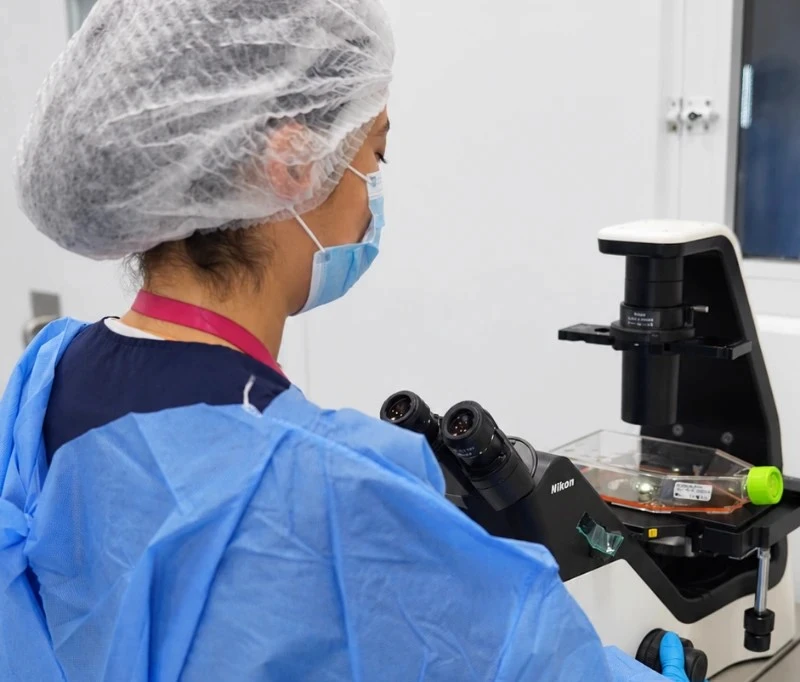
Direct access to the evidence.
This selection brings together publications linked to the team’s main lines of research. Each publication includes direct access to the DOI or the original source.
The synovial environment steers cartilage deterioration and regeneration
Science Advances · 2023 · Osteoarthritis and cartilage
Clinical cell therapy guidelines for neurorestoration (IANR/CANR 2022)
J. of Neurorestoratology · 2022 · Neurorestoration
Advances and prospects of cell therapy for spinal cord injury patients
J. of Neurorestoratology · 2022 · Spinal cord
Local immunomodulation and muscle progenitor cells induce recovery in atrophied muscles in spinal cord injury patients
J. of Neurorestoratology · 2018 · Muscle recovery
Ozone therapy with local cellular immune modulation and disc progenitor cell implant is safe, effective and efficient
Open J. of Orthopedics and Rheumatology · 2020 · Intervertebral disc
In vitro differentiation of adult adipose mesenchymal stem cells into retinal progenitor cells
Ophthalmic Research · 2012 · Retina
Feasibility, safety, and preliminary proof of principles of autologous neural stem cell treatment combined with T-cell vaccination for ALS patients
Cell Transplantation · 2012 · Amyotrophic lateral sclerosis
Case report on the clinical results of a combined cellular therapy for chronic spinal cord injured patients
Spinal Cord · 2009 · Chronic spinal cord injury
Combined protocol of cell therapy for chronic spinal cord injury: electrical and functional recovery of two patients
Cytotherapy · 2006 · Chronic spinal cord injury
Autoreactive T cells induce in vitro BM mesenchymal stem cell transdifferentiation to neural stem cells
Cytotherapy · 2006 · Neural pre-differentiation
How progress is evaluated.
Follow-up combines the patient’s own perception with clinical and functional evaluations and complementary studies depending on the tissue or condition. When possible, these results are compared with a documented starting point to analyze the individual response and guide later decisions.
Research, technology transfer and training in advanced therapies.
ACIDTA (Asociación Civil de Investigación y Desarrollo de Terapias Avanzadas) is a non-profit civil association for research and development in advanced therapies, whose mission is to promote and support basic and translational research in advanced therapies, including cell therapy.
Its activities include developing lines of research, building infrastructure for cell processing and storage, implementing clinical protocols, establishing agreements with national and international organizations, and postgraduate training.
ACIDTA also promotes technology transfer and good practices for the use of advanced therapies, and runs research programs related to spinal cord injury, osteoarthritis and herniated discs.
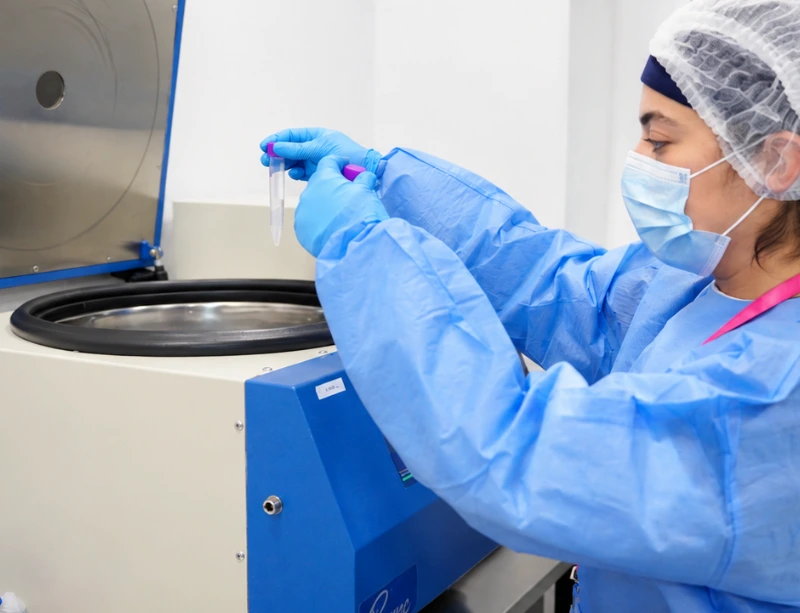
Everything you need to know about research and publications
The main lines of research are:
- Cell selection and expansion.
- Biological mechanisms involved in cell differentiation, such as the interaction between different cell populations and with biological matrices.
- Clinical application of regenerative medicine strategies in different conditions.
- Evaluation and follow-up of regenerative medicine interventions.
LYRACELL carries out this work in partnership with ACIDTA, integrating research and clinical practice.
Its development brings together more than 20 years of scientific work and publications in journals such as Science Advances and Journal of Neurorestoratology.
No. A publication provides evidence about a specific population, protocol or condition. Any possible indication must be defined through an individual medical evaluation.
In the list on this page, with direct access to the DOI or the original source of each paper.
Research guides the method. Diagnosis guides each treatment.
Explore the publications linked to the Moviglia Method or request a medical evaluation to review your case.