


Carpal tunnel: cell therapy applied to carpal tunnel syndrome.
Tingling, numbness, pain or loss of strength in the hand may be related to compression of the median nerve as it passes through the wrist. At LYRACELL we evaluate the condition of the nerve and the structures around it to determine whether cell therapy can be part of a personalized treatment.
Personalized cell therapyUltrasound-guidedMinimally invasiveIn-house laboratory
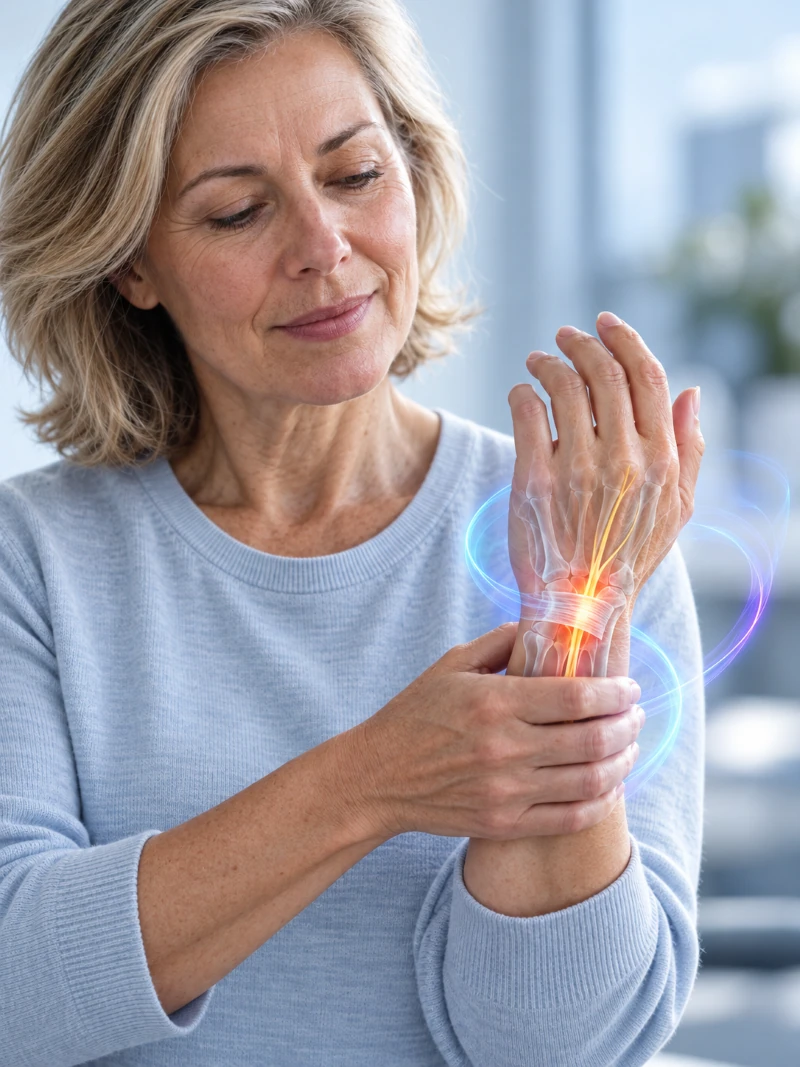
Understanding the carpal tunnel
The carpal tunnel is a narrow passage located in the wrist, bounded by the carpal bones and the transverse carpal ligament —also called the annular ligament—. Running through it are the flexor tendons of the fingers and the median nerve, which is responsible for sensation in part of the hand and for essential motor functions.
When pressure inside this space increases, the nerve can become compressed. If this situation persists, it can progressively affect the nerve’s ability to transmit sensory and motor signals.
Median nerve compression and inflammation
Sustained pressure can irritate and compromise the median nerve, causing numbness, burning, tingling or pain, mainly in the thumb, index finger, middle finger and part of the ring finger.
Flexor tendon tenosynovitis
Inflammation and thickening of the sheaths that cover the flexor tendons can further reduce the space available inside the tunnel and increase compression on the nerve.
Loss of strength and muscle atrophy
When compression persists over time, the transmission of motor signals can deteriorate. In advanced cases, weakness or atrophy of the thenar eminence muscles may appear, affecting actions such as holding an object, pinching or opening a jar.
Nerve involvement and inflammation of the surrounding tissues can occur at the same time. That is why the diagnosis must determine which structures are affected and to what degree.
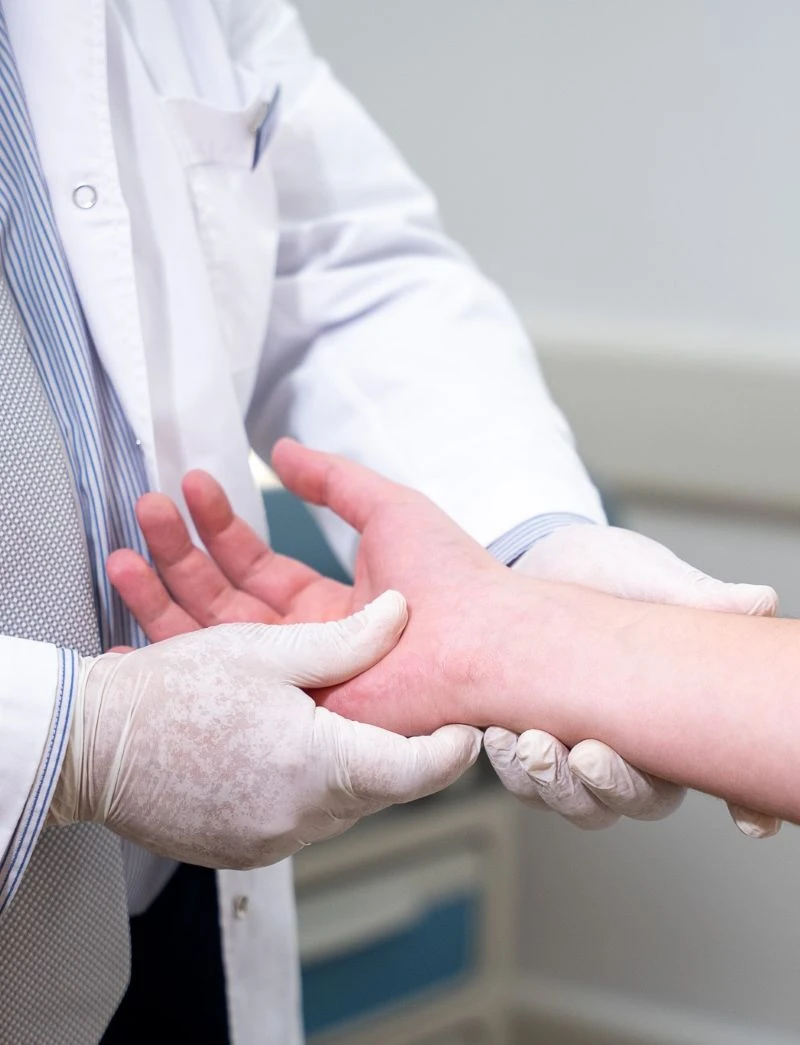
How can it present?
Tingling or numbness
It may be felt mainly in the thumb, index finger, middle finger and part of the ring finger.
Pain or burning
Discomfort may be located in the wrist and hand and, in some cases, spread toward the forearm or interfere with daily activities.
Nighttime symptoms
Tingling or numbness may get worse at night and interrupt sleep.
Loss of strength
Holding a phone, opening a jar, writing or handling objects may start to take more effort.
Loss of function
As the involvement progresses, sensory and motor changes may limit movements and activities that used to be done normally.
Your own cells, directed toward the affected nerve and tissues.
The treatment combines mesenchymal stem cells obtained from adipose tissue with immune system cells from the blood.
Under the protocols of the Moviglia Method, the LYRACELL team processes the cells in the laboratory and prepares a specific combination according to the tissues involved —nerve, tendon or muscle, as appropriate—, the diagnosis and the severity of the injury.
The stem cells are part of a preparation intended to support biological processes related to tissue repair and remodeling. The immune system cells help direct the preparation toward the type of tissue being treated and shape its interaction with the affected environment.
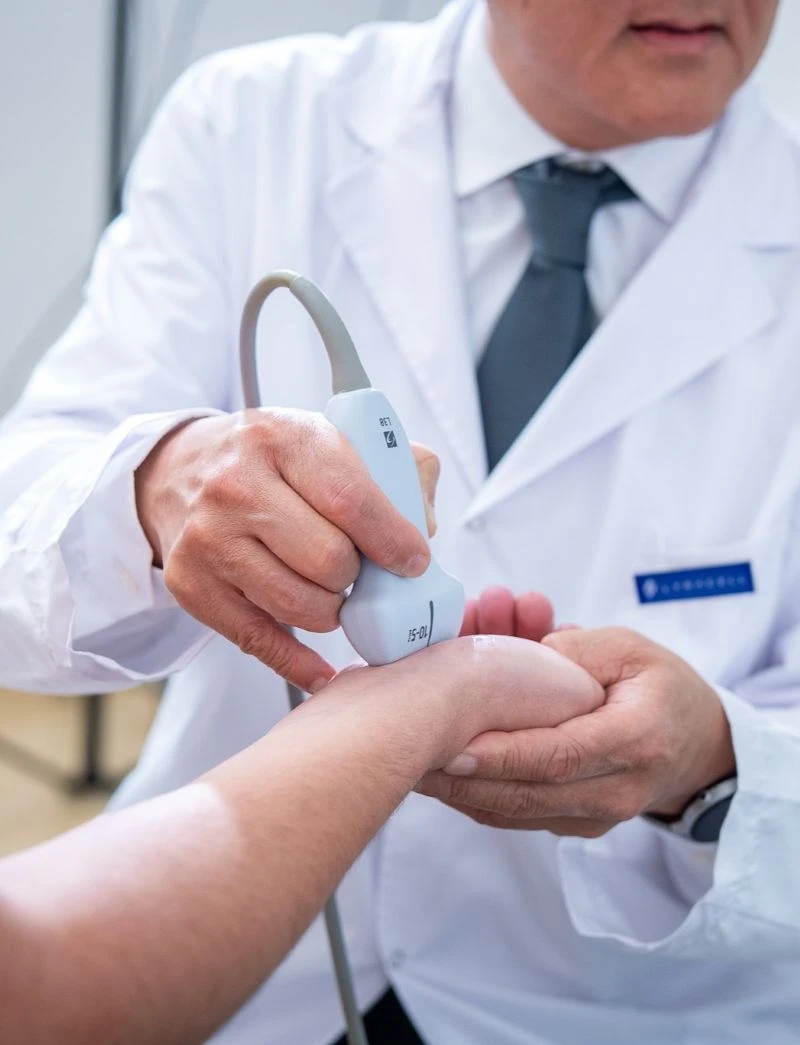
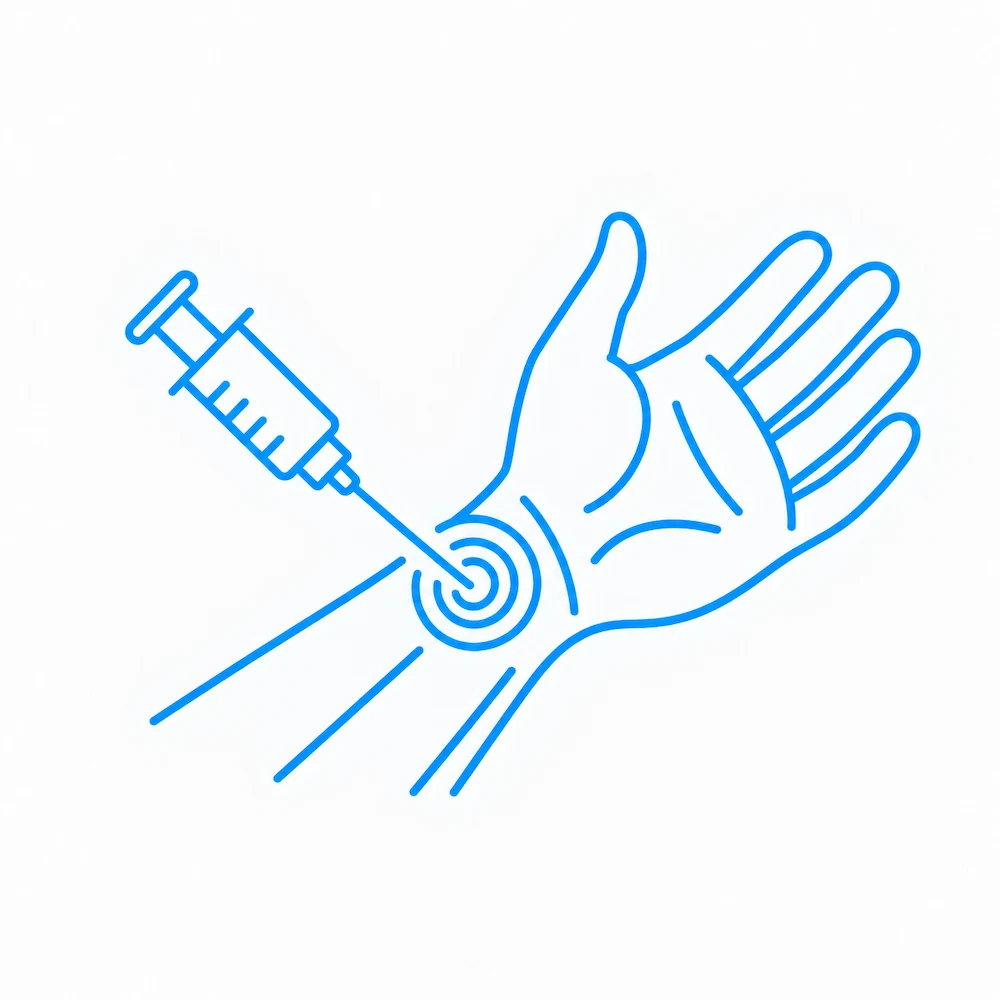
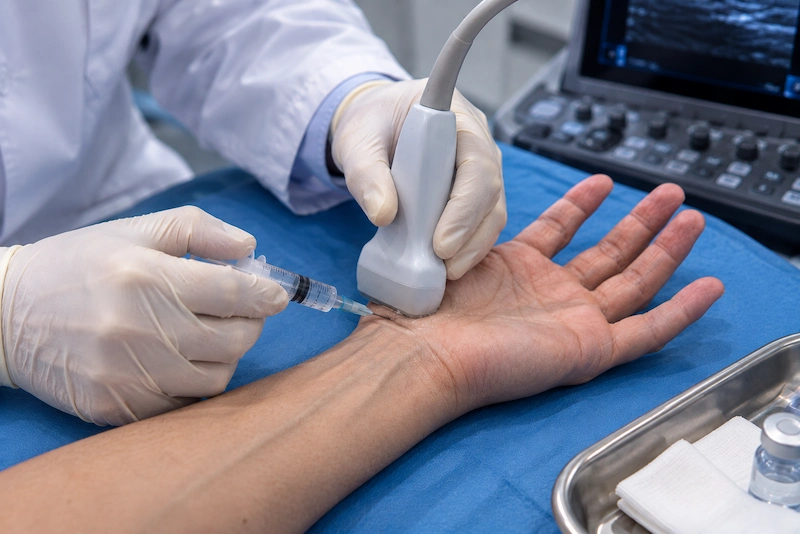
The preparation is administered through a targeted ultrasound-guided injection near the median nerve and the other structures identified during the evaluation, with the aim of supporting the sensory and motor function of the hand.
The combination of both cell types seeks to support the body’s natural repair process, through a personalized approach and under strict medical and safety criteria.
From the laboratory to the carpal tunnel
The stem cells are obtained from the patient and, together with immune system cells, are processed in the laboratory following the protocols of the Moviglia Method. Based on the diagnosis and the degree of involvement of the nerve, the tendons and, when appropriate, the muscles, the LYRACELL team prepares the cell combination before its targeted application to the structures that need treatment.

Four stages, one process defined by the degree of compression.
From the evaluation of the median nerve to the follow-up of its function, each stage is defined according to the characteristics of each case.
1
Evaluation
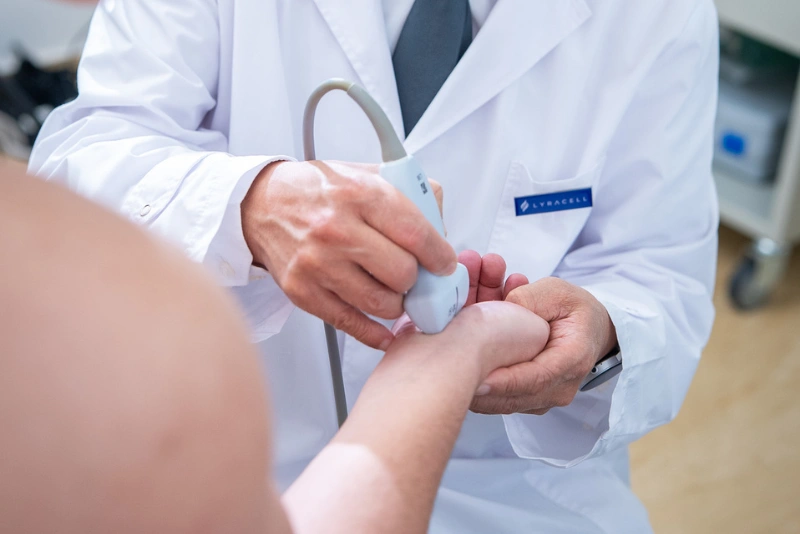
We review the medical history, work or sports habits and how the symptoms have evolved. As appropriate, this is complemented with electromyography, nerve conduction studies, ultrasound and MRI to determine the involvement of the median nerve and assess the tendons and muscles involved.
2
Treatment proposal
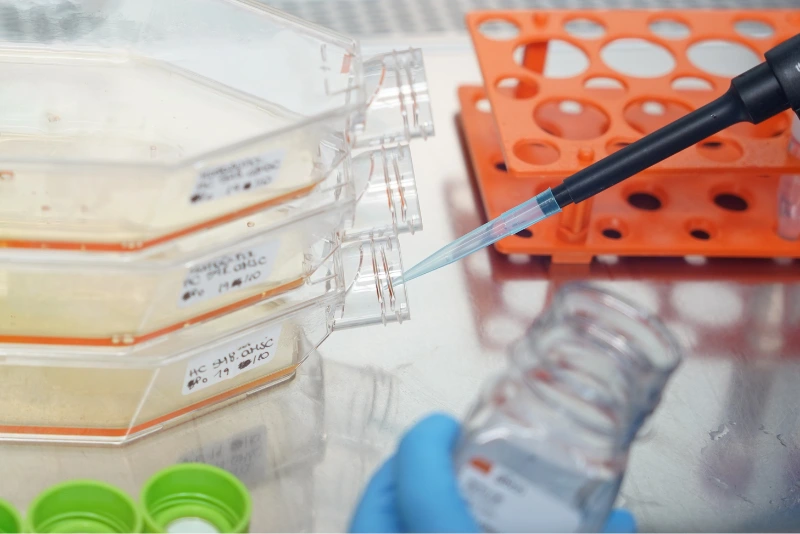
The medical team assesses whether cell therapy may be appropriate and defines the tissues to be treated and the preparation. If the patient is eligible, adipose tissue and peripheral blood are collected, and a combination adapted to the affected tissues is processed in the laboratory.
3
Application
In a minimally invasive way and under ultrasound guidance, the preparation is applied near the median nerve and the flexor tendons and, if indicated, into muscles with atrophy. If surgery is needed to release the transverse carpal ligament, the therapy can be added during or after it.

4
Follow-up
At first there may be transient discomfort or inflammation. Physical therapy, occupational therapy and nerve gliding help restore mobility, strength and function. Two or three applications may be scheduled over 6 to 12 months, with clinical follow-up and nerve conduction studies.
An accurate evaluation makes it possible to treat the specific problem, not just the pain.
Could this treatment be an option for you?
The indication requires identifying involvement of the median nerve and its associated structures through clinical evaluation and the corresponding diagnostic studies.
It may be an option if…
You have pain, tingling or numbness associated with carpal tunnel syndrome.
Symptoms come back repeatedly or interfere with your sleep.
You have started to lose strength or precision in activities you used to do normally.
Studies show measurable involvement of the median nerve.
There is also involvement of the flexor tendons or other structures of the carpal tunnel.
Symptoms are starting to limit your daily, work or sports activities.
You want to address the affected structures and regain function, not just control the symptoms.
You want to act on an identified nerve involvement before the loss of function progresses.
Another approach may be needed if…
There is complete muscle denervation or advanced irreversible atrophy of the thenar eminence, which may require decompression surgery or another procedure.
The mechanical compression requires surgical carpal tunnel release before or together with cell therapy.
The pain or numbness originates from cervical radiculopathy, caused by compression of the nerve roots in the neck.
There is an uncontrolled systemic neuropathy, such as severe diabetic polyneuropathy, that could explain the symptoms.
Carpal tunnel studies do not account for the symptoms and another cause needs to be investigated.
The indication is defined individually based on the medical evaluation and the corresponding studies.
Images that make it possible to compare progress.
Follow-up studies make it possible to compare the function of the median nerve before treatment and at later check-ups. They correspond to a specific case: the response, timing and degree of improvement vary from patient to patient.
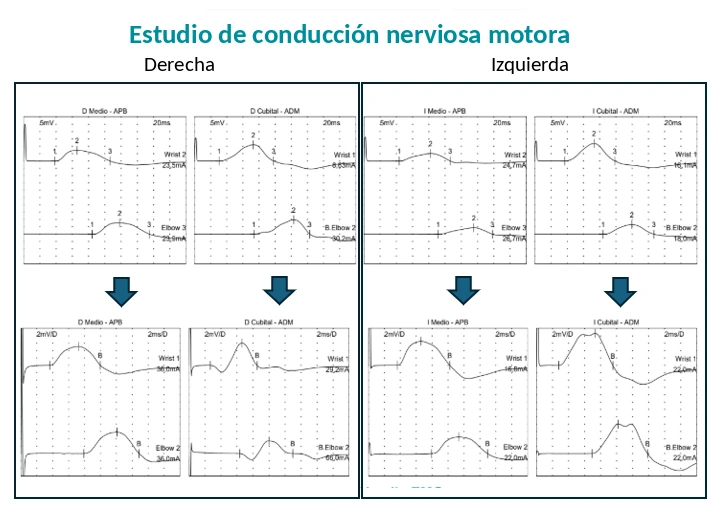
44-year-old patient with carpal tunnel syndrome in both hands.
The patient received 2 cycles of regenerative treatment applications over 6 months. To measure the results, a nerve conduction study was performed, which measures how fast and how strongly the nerve transmits the signal to the muscles of the hand. Comparing the studies before and after, we found:
- The signal passes through the wrist faster: the time it takes the signal to cross the carpal tunnel was reduced.
- Stronger nerve signal: the response of the thumb muscle increased in both hands
- Improvement in both hands: both median nerves show recovery of their function.
Treating the affected structures is part of the process. So is recovering function.
After the application, the medical team defines a follow-up and rehabilitation plan adapted to the degree of nerve involvement, the tissues treated and each patient’s progress.
First days
There may be local discomfort or transient inflammation. The medical team indicates the necessary care and any temporary adjustments to activity.
Rehabilitation and occupational therapy
Physical therapy and occupational therapy can support the treatment with exercises aimed at promoting nerve gliding, regaining strength and retraining hand activities.
Progression is adapted to each patient’s sensory and motor recovery.
Measurable results
Check-ups make it possible to assess changes in pain, tingling, sensation, strength and hand function.
When indicated, nerve conduction studies can be repeated to objectively compare the function of the median nerve with the starting point.
Frequently asked questions
It is a condition caused by compression of the median nerve as it passes through a narrow space in the wrist called the carpal tunnel.
The median nerve provides sensation to specific areas of the hand. Its compression can cause tingling, numbness or burning mainly in the thumb, index finger, middle finger and part of the ring finger.
The clinical evaluation can be complemented with nerve conduction studies, electromyography, ultrasound and MRI, depending on the characteristics of each case.
The base treatment is autologous: the stem cells are obtained from the patient’s own adipose tissue and the immune system cells from their blood. In certain cases, depending on the medical indication, immune system cells from a selected donor may be used.
The preparation is administered through a targeted injection under high-resolution ultrasound guidance, near the median nerve and the other structures that need treatment.
Depending on the severity of each case, two to three applications may be scheduled over a period of 6 to 12 months. The number is defined at the start of treatment, as part of a plan with specific goals. At the end of the plan, progress is evaluated and, if needed, new interventions are defined.
In certain cases, the compression requires surgical release of the transverse carpal ligament. Cell therapy can be added during or after that procedure, depending on the diagnosis and the medical team’s judgment.
In addition to assessing symptoms, sensation, strength and hand function, nerve conduction studies can be repeated to compare progress with the initial condition.
No. Similar symptoms can originate from cervical radiculopathy, ulnar nerve entrapment or other neuropathies. If carpal tunnel studies do not explain the symptoms, other possible diagnoses need to be investigated.
The first step is understanding how much the nerve is affected.
Every treatment begins with an evaluation to understand the condition of the median nerve, identify the affected structures and determine which approach may be right for you.