


Pelvic floor: cell therapy for incontinence and pelvic floor weakness.
Incontinence, chronic pelvic pain, a feeling of heaviness in the genital area or discomfort during sex may be related to pelvic floor dysfunction. These symptoms can affect everyday activities such as exercising, lifting, sneezing or sitting. At LYRACELL we assess the structures involved and the type of dysfunction to determine whether cell therapy can be part of a personalized treatment.
Personalized cell therapyUltrasound-guidedMinimally invasiveIn-house laboratory

Understanding the pelvic floor
The pelvic floor is made up of muscles, ligaments and fascia that act as a support structure for organs such as the bladder, the uterus or the prostate, and the rectum. It is also involved in continence and sexual function.
Pelvic floor dysfunction can affect the strength, tone or coordination of these structures:
Hypertonicity or excessive muscle tension
When the muscles stay too tense or have difficulty relaxing, chronic pelvic pain, burning, discomfort during sex —dyspareunia— or difficulty emptying the bowel or bladder may appear.
Hypotonicity and weak support
Loss of strength and firmness in the muscles, ligaments and fascia can lead to the descent of the pelvic organs and be associated with prolapse or involuntary leakage of urine or gas.
Lack of neuromuscular coordination
When the muscles do not respond in a coordinated way during exertion or emptying, dyssynergia, urge incontinence or retention may occur.
In many cases, muscle weakness, altered tone and damage to the supporting fascia occur at the same time.

How can it present?
Involuntary leakage
It may occur when exercising, lifting, coughing, sneezing or with a sudden feeling of urgency.
Pelvic pain or tension
The pain may be persistent and appear when sitting, during certain activities or even at rest.
Feeling of heaviness or pressure
Weakness of the supporting tissues can cause a feeling of pressure, heaviness or descent in the pelvic area.
Discomfort during sex
Changes in muscle tone can cause pain, burning or discomfort during sexual activity.
Functional difficulties
Changes in muscle strength or coordination can affect continence, bowel and bladder emptying and other everyday activities.
Your own cells, directed toward the tissues that need treatment.
The body has natural self-repair mechanisms. However, in the face of repetitive microtrauma, childbirth, previous surgery, hormonal changes or chronic inflammatory processes, that capacity may be insufficient.
In these cases, the contribution of cells aims to support biological processes associated with the repair of muscle and connective tissue, modulate inflammation and support the functional recovery of the pelvic floor.
The personalized treatment combines two key components:
- Stem cells: can contribute to the remodeling of muscle fibers, the extracellular matrix and the collagen of the affected tissues.
- Immune system cells: help direct the stem cells toward lineages linked to smooth and striated muscle cells, endothelial cells and supporting connective tissue.
Under the protocols of the Moviglia Method, the LYRACELL team obtains stem cells from the patient’s own adipose tissue and immune system cells from their blood. The cells are processed in the laboratory and combined as part of a preparation directed toward the pelvic structures identified in the evaluation.
Within this process, the immune system cells take part in the pre-differentiation of the stem cells into muscle cells and in their interaction with the tissues that need treatment.
The combination of both cell types aims to support the body’s natural repair process, through a personalized approach and under strict safety protocols.
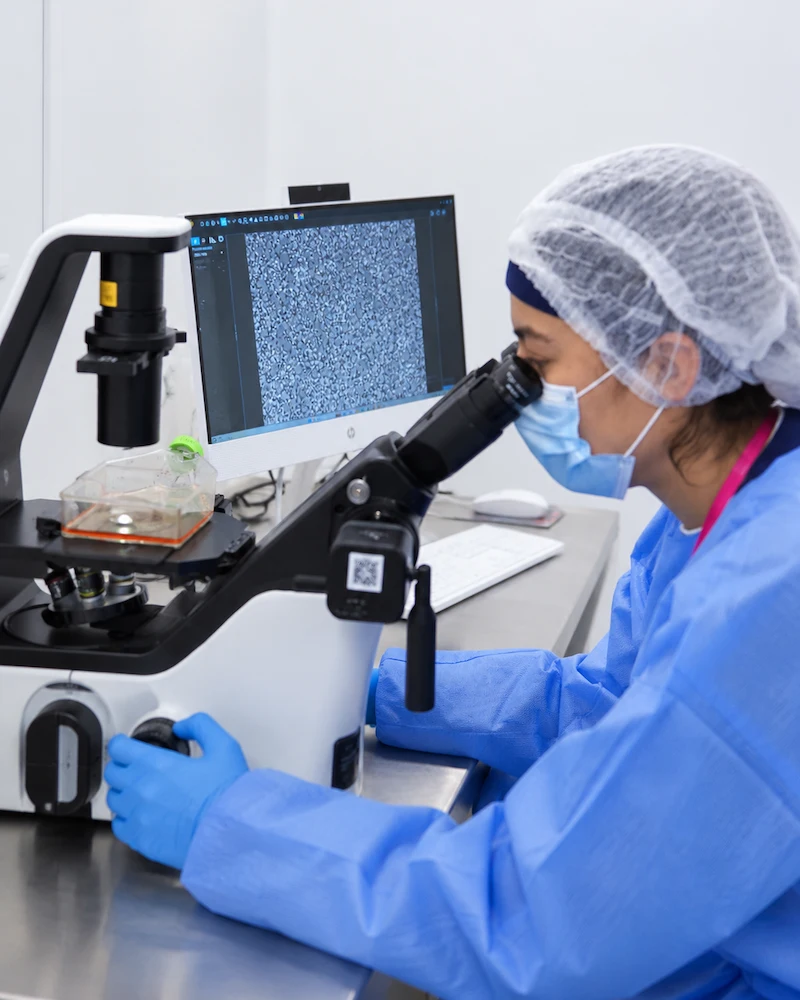
From the laboratory to your pelvic floor
The stem cells are obtained from the patient and, together with the immune system cells, are processed in the laboratory following the protocols of the Moviglia Method. There, the LYRACELL team prepares the cell combination according to the type and degree of involvement identified before its localized application.




Four stages, a process defined for each case.
From identifying the structures involved to monitoring progress, each stage is defined individually.

1
Evaluation
The medical history, how long the symptoms have been present and the gynecological or urological history, childbirth and surgeries are analyzed. This can be complemented with ultrasound, MRI, surface electromyography, urodynamics, manometry and a bladder diary to determine the type of dysfunction, its severity and the structures affected.

2
Treatment proposal
The medical team determines the severity of the dysfunction and the degree of atrophy or tissue damage. If cell therapy is indicated and the patient is eligible, the preparation and cell volume are defined, and adipose tissue and blood are collected to prepare it in the laboratory.
3
Application
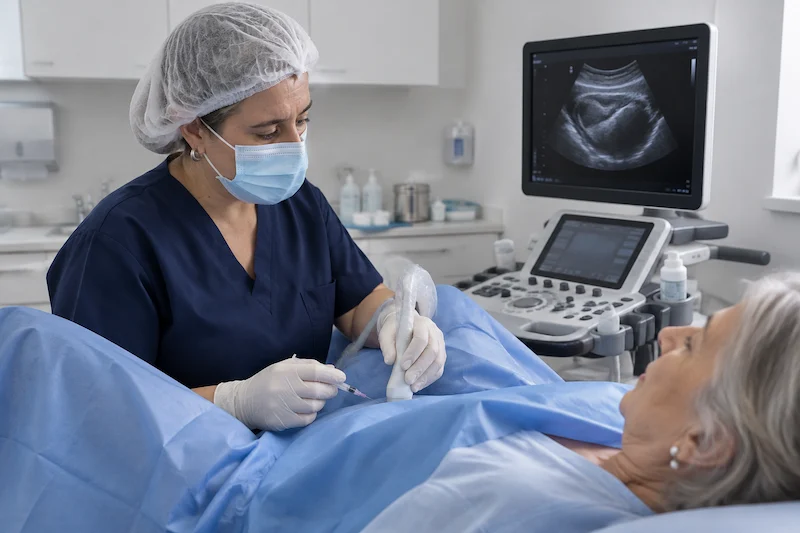
The procedure is minimally invasive. The prepared cells are injected locally into the pelvic floor muscles, using local anesthesia and ultrasound guidance. The number and frequency of applications are determined according to the characteristics and progress of each case.
4
Follow-up
Follow-up can be complemented with exercises to retrain the strength, control and coordination of the treated muscles. The medical team assesses changes in symptoms, bladder and bowel control, pain and the activities that were limited.
An accurate evaluation makes it possible to treat the specific problem, not just the symptom.
Could this treatment be an option for you?
The indication is defined individually based on the symptoms, the medical evaluation and the degree of involvement of the muscles and supporting tissues.
It may be an option if…
You have incontinence associated with pelvic floor dysfunction.
You have a mild or moderate prolapse.
You have chronic pelvic pain related to changes in muscle tone.
Discomfort during sex is associated with pelvic floor dysfunction.
There is tissue atrophy or damage related to a history of radiotherapy, surgical scars or trauma.
The symptoms limit your everyday, physical or sexual activities.
You want to preserve pelvic floor function and act on early signs of weakness or deterioration of its structures.
Another approach may be needed if…
There is a severe grade IV prolapse, with complete loss of normal anatomy and a need for prior structural surgical correction.
The indication is defined individually based on the medical evaluation and the corresponding studies.
Treating the tissues is part of the process. Retraining their function is too.
After the application, the medical team defines a follow-up plan adapted to the type of dysfunction, the structures treated and each patient’s progress.
First days
The medical team provides aftercare instructions following the procedure and any temporary changes in activity that apply to each case.
Muscle retraining
Specific pelvic floor exercises can support the treatment by working on contraction strength, control and coordination of the muscles. The type of training must be adapted to the dysfunction identified: a weakened pelvic floor does not have the same needs as one with hypertonicity or coordination problems.
Measurable progress
Follow-up makes it possible to assess changes in bladder and bowel control, pain, muscle function and the everyday activities that were limited. When indicated, functional studies can be repeated to compare progress with the starting point.
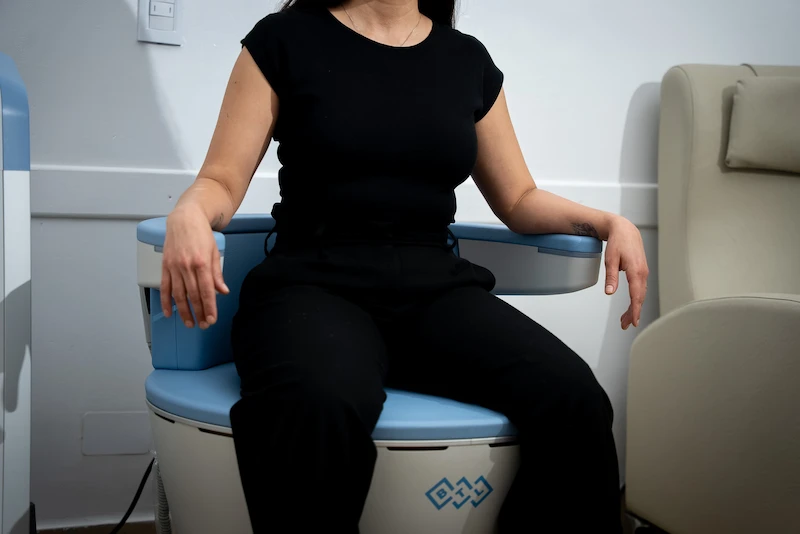
Targeted muscle work with Emsella
To enhance the cell process, the approach may include sessions with Emsella, a non-invasive technology based on high-intensity focused electromagnetic energy (HIFEM). This system triggers thousands of deep supramaximal pelvic floor contractions in just a few minutes, stimulating the entire pelvic floor simultaneously and effectively.
This combination of cell stimulation and deep muscle retraining makes it possible to:
- Strengthen weakened muscles quickly and without active effort from the patient.
- Optimize the support function for the bladder, uterus and pelvic organs.
- Support clinical progress and improve continence, stability and quality of life.
Frequently asked questions
It is a group of muscles, ligaments and fascia that support organs such as the bladder, the uterus or the prostate, and the rectum. It is also involved in continence and sexual function.
No. There may be hypotonicity and weakness, but also hypertonicity —excessive muscle tension— or neuromuscular coordination problems. Identifying which problem is present is essential before defining the approach.
Depending on each case, the evaluation may include ultrasound, MRI, surface electromyography, urodynamics, manometry and a bladder diary.
The base treatment is autologous: the stem cells are obtained from the patient’s own adipose tissue and the immune system cells from their blood. In certain cases, depending on the medical indication, immune system cells from a selected donor may be used.
The preparation is injected locally into the pelvic floor muscles through a minimally invasive procedure, with local anesthesia and ultrasound guidance.
Usually, two to three applications may be scheduled over a period of 6 to 12 months. The number is defined at the start of treatment, according to the characteristics of each case, as part of a plan with specific goals. At the end of the plan, progress is assessed and, if needed, further interventions are defined.
They can be part of the recovery process. The type of exercise must be defined according to the problem identified, because weakened muscles and overly tense muscles require different goals.
Mild or moderate prolapses can be evaluated by the medical team to determine whether cell therapy can be part of the approach. Severe grade IV prolapses require prior structural surgical correction.
The first step is understanding what is affecting your function.
Every treatment begins with a medical evaluation to understand your symptoms, identify the structures involved and determine which approach may be right for you.