


Foot: cell therapy applied to plantar fasciitis, osteoarthritis and tendon injuries.
Foot pain can affect everyday activities such as standing, walking, jumping or exercising. It may appear suddenly after a blow, a sprain or a fracture, or develop gradually due to overload, changes in the way you step or wear. At LYRACELL we evaluate the affected structures and the biomechanics of the foot to define a personalized treatment.
Personalized cell therapyImage-guidedMinimally invasiveIn-house laboratory

Understanding the foot
The foot is a complex biomechanical structure made up of 26 bones, multiple joints, cartilage, ligaments, tendons and fasciae. All these structures work together to support the arch of the foot and distribute body weight with every step.
Pain may be mainly associated with:
Plantar fasciitis and heel spurs
Inflammation, thickening or micro-tears of the plantar fascia —the band of tissue that supports the arch of the foot— can cause pain and affect weight-bearing, especially where it attaches to the heel bone (calcaneus).
Joint wear and damage
Osteoarthritis can cause progressive deterioration of the cartilage in the joints of the tarsus, the metatarsus or the base of the big toe, as in hallux rigidus. This can lead to bone friction, edema, pain and limited movement.
Tendon and ligament injuries
Tendinopathies, wear or chronic inflammation of structures such as the posterior tibial tendon or the insertion of the Achilles tendon, together with ligament strain, can compromise the arch of the foot, cause instability and alter how loads are distributed.
In many cases, several structures are affected at the same time.
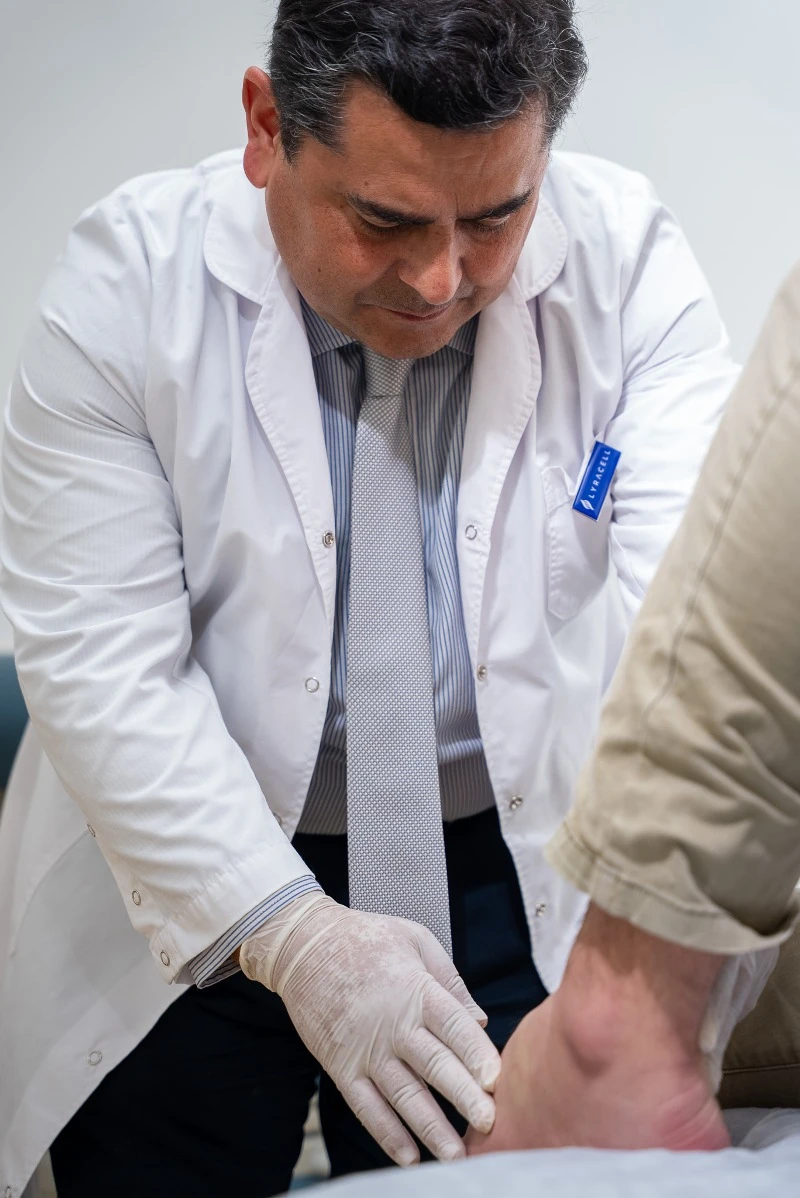
How can it present?
Pain when standing or walking
Discomfort may appear when putting weight on the foot, when walking or after standing for a long time.
Heel or arch pain
Involvement of the plantar fascia can cause pain in the heel or along the arch of the foot.
Stiffness or limited movement
Joint wear can make it harder to move the joints of the foot or the big toe.
Inflammation or swelling
Edema may appear in areas such as the heel, the instep or around the tendons.
Changes in your step or instability
Tendon and ligament involvement can alter the arch of the foot and the distribution of loads, and affect stability when walking.
Your own cells, directed toward the tissue that needs treatment.
The body has natural self-repair mechanisms. However, in the case of advanced structural injuries, chronic refractory fasciitis or the continuous mechanical impact of walking, that capacity may not be enough.
In these cases, the contribution of cells seeks to support biological processes related to tissue repair and remodeling, modulate inflammation and support the recovery of foot function.
The personalized treatment combines two key components: stem cells, which are part of a preparation intended to support biological processes related to tissue repair and remodeling, and immune system cells, which help direct the stem cells toward the tissue that needs treatment —fascia, cartilage, tendon, ligament or bone—.
Under the protocols of the Moviglia Method, the LYRACELL team obtains stem cells from the patient’s own fat. These are processed and expanded in the laboratory and then combined with tissue-specific immune system cells. The preparation includes pre-differentiated stem cells and immune system cells directed toward the structures identified in the diagnosis.
The combination of both cell types seeks to support the body’s natural repair process, through a personalized approach and under strict safety protocols.
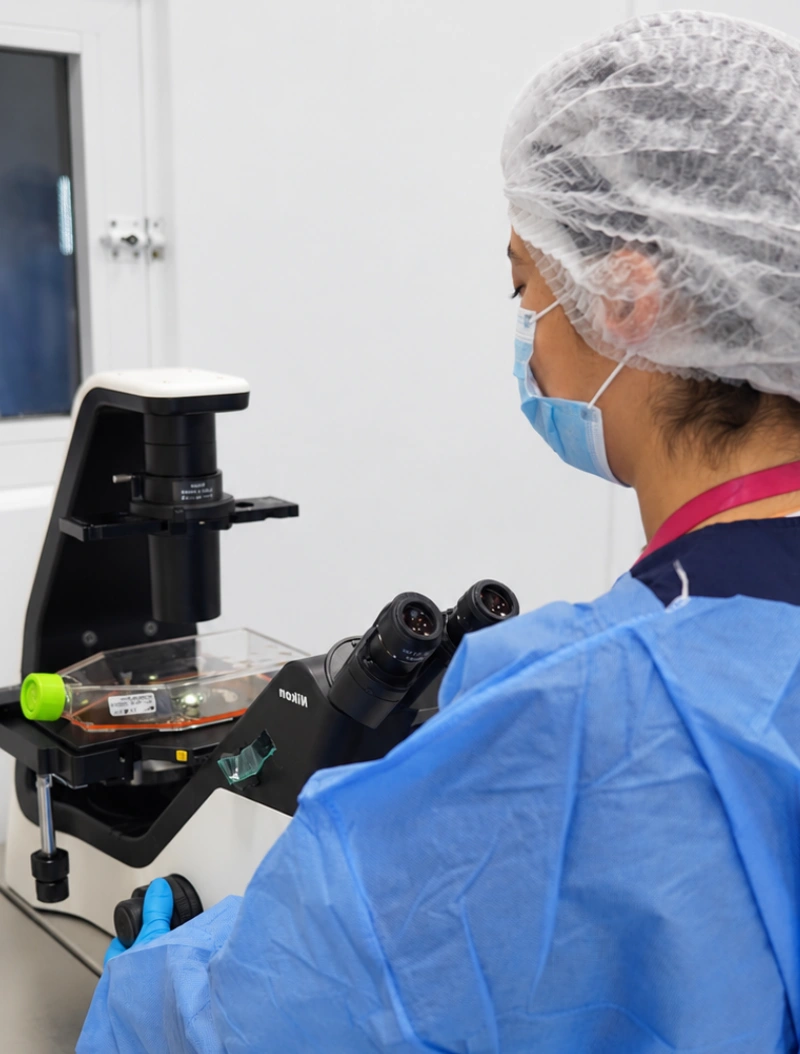
From the laboratory to your foot
The cells are processed in the laboratory and prepared according to the tissue identified in the evaluation before the targeted application.

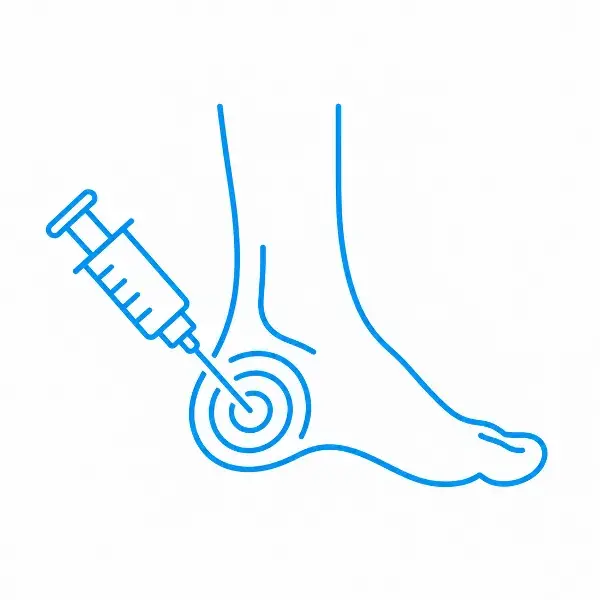
Four stages, one process defined for each case.
From the initial evaluation to the follow-up of your progress, each stage of the treatment is defined by the medical team according to your case.
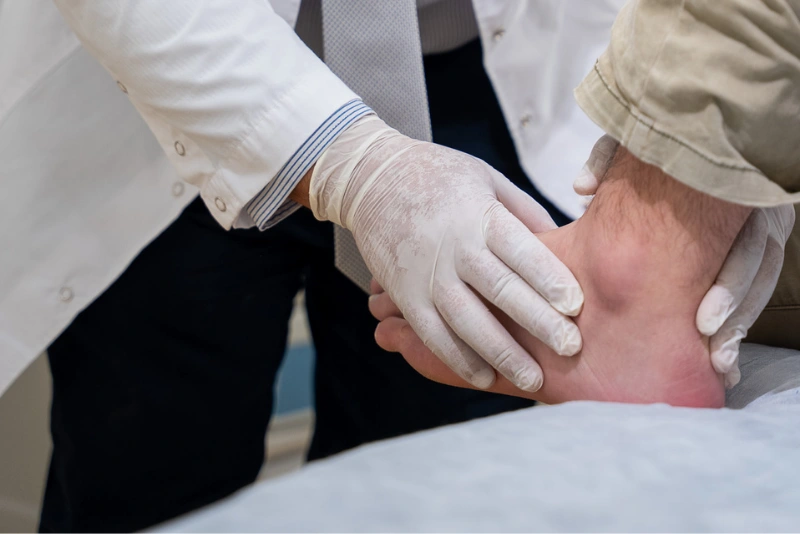
1
Evaluation
We analyze the medical history, the way you step, your usual footwear, any history of trauma or sports injuries, and imaging studies —X-rays, ultrasound, CT or MRI— to identify the affected structures.
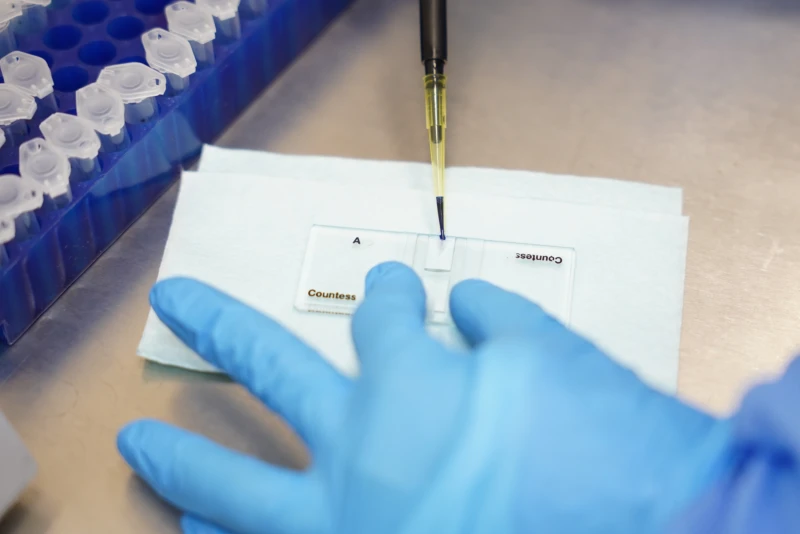
2
Treatment proposal
If the patient is eligible, a plan is designed according to the extent of the injury and the tissues involved —plantar fascia, cartilage, tendons or ligaments—. Adipose tissue and peripheral blood are collected, and the combination is prepared in the laboratory according to the affected tissue.
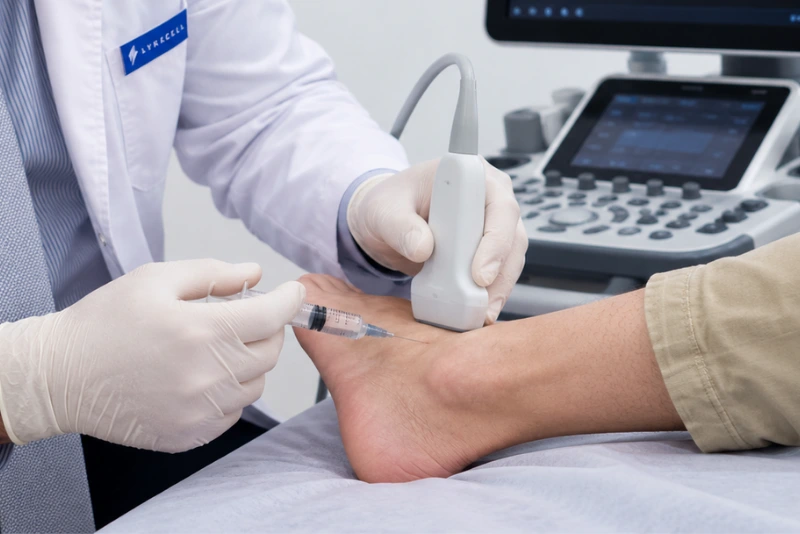
3
Application
In a minimally invasive way, with ultrasound or CT guidance and local anesthesia, the cells are applied into the plantar fascia, the joint space or the tendon insertion. In cases of severe mechanical injury, such as a Lisfranc injury, they can be applied during or after surgery.

4
Follow-up
At first there may be local discomfort or inflammation. The treatment can be complemented with physical therapy, gait analysis, insoles if indicated and strengthening. Progress is evaluated at later medical check-ups: clinical, functional and imaging.
An accurate evaluation makes it possible to treat the specific problem, not just the pain.
Could this treatment be an option for you?
The indication is defined individually based on the medical evaluation, symptoms and imaging studies.
It may be an option if…
You have persistent pain, inflammation or functional limitation in the foot.
The problem affects your walking, daily activities or sports.
Your medical studies show a structural change.
You want to preserve foot function and treat an identified injury.
Another approach may be needed if…
There are severe rigid deformities, structural bone collapse or completely ankylosed joints, which may require surgical reconstruction or arthrodesis.
The pain, burning or numbness has a neuropathic origin, such as peripheral neuropathy —including diabetic neuropathy— or a Morton’s neuroma.
The symptoms come from compression of the nerve roots in the lumbar spine.
The evaluation makes it possible to distinguish a structural problem in the foot from other causes that can produce similar symptoms.
Recovering the tissue also means redistributing loads correctly.
The recovery plan may include physical therapy rehabilitation, gait analysis, insoles when indicated and strengthening exercises. The goal is to support the progress of the tissues and work on the biomechanics of the foot with every step.
First days
There may be transient local discomfort or inflammation. The medical team provides the corresponding follow-up and defines how to temporarily adapt activities.
Rehabilitation and biomechanics
Physical therapy, gait analysis, insoles when indicated and strengthening exercises support the process to improve weight-bearing, load distribution and foot stability, and to support a gradual return to activities.
Measurable results
Follow-up makes it possible to assess aspects such as pain, mobility, strength, stability and functional capacity. When indicated, imaging studies can be repeated to compare the condition of the treated structures with the initial evaluation.
Frequently asked questions
It depends on the diagnosis. The plantar fascia, the joint cartilage, tendons such as the posterior tibial or the Achilles tendon, and the ligaments are evaluated.
Plantar fasciitis is one of the conditions we evaluate most often, especially when it is chronic and has not responded to other conservative treatments. The indication is defined after a medical evaluation.
The base treatment is autologous: the stem cells are obtained from the patient’s own adipose tissue and the immune system cells from their blood. In certain cases, depending on the medical indication, immune system cells from a selected donor may be used.
The medical team analyzes your medical history, the way you step, the footwear you usually wear, any history of trauma or sports injuries, and your imaging studies.
Yes. The cells are applied with ultrasound or CT guidance and local anesthesia, depending on the area to be treated.
In some cases it can be an alternative to surgery. When there is a severe mechanical problem or a joint needs to be stabilized, as in a Lisfranc injury, surgery may be required. In those cases, the cells can be applied during or after the procedure.
It depends on each case. In the first days there may be local discomfort or inflammation. Progress is evaluated at later medical check-ups.
Yes. It may include physical therapy rehabilitation, gait analysis, insoles when indicated and strengthening exercises to improve load distribution.
When there are severe rigid deformities, bone collapse or completely ankylosed joints. Nor is it recommended when the pain has a neuropathic origin, such as peripheral neuropathy or a Morton’s neuroma, or when it comes from the lumbar spine.
Through clinical, functional and imaging check-ups, which are compared with the starting point.
The first step is understanding your case.
Every treatment begins with a medical evaluation to understand your diagnosis, identify the affected structures and determine which approach may be right for you.