


Heart: cell therapy for heart failure.
The heart works continuously to pump blood and deliver oxygen and nutrients throughout the body. When its muscle loses the ability to contract or relax properly, the efficiency with which it pumps blood can decrease and it may begin to limit activities that were once done normally. At LYRACELL we assess the structural and functional state of the heart to determine whether cell therapy can be part of a personalized treatment for patients with heart failure.
Personalized cell therapyComprehensive medical evaluationIntravenous administrationIn-house laboratory

Understanding the heart
The heart is a muscular pump made up of chambers that receive blood and propel it through the circulatory system. Its wall is composed mainly of myocardium, the muscle tissue responsible for generating the force needed for each heartbeat.
When this muscle weakens, becomes stiff or has damaged areas, the heart can gradually lose the ability to move the volume of blood the body needs. When this impairment significantly alters its function, heart failure can develop.
The damage can involve several mechanisms at the same time.
Myocardial deterioration
The heart muscle can suffer loss of or damage to muscle cells as a result of reduced blood supply, previous heart attacks or certain cardiomyopathies. This can affect the heart’s ability to contract.
Cardiac remodeling and dilation
When its function remains impaired over time, the heart chambers can dilate or their walls can change thickness. This remodeling process gradually changes the structure of the heart and can further reduce pumping efficiency.
Congestion and fluid retention
When the heart cannot move blood adequately, congestion can occur in different parts of the body.
Fluid buildup in the lungs can contribute to shortness of breath, while fluid retention in the tissues can cause swelling in the legs, ankles, feet or abdomen.
Heart muscle impairment can coexist with chronic inflammation mechanisms. That is why the evaluation needs to determine how much damage there is and how it is affecting heart function.
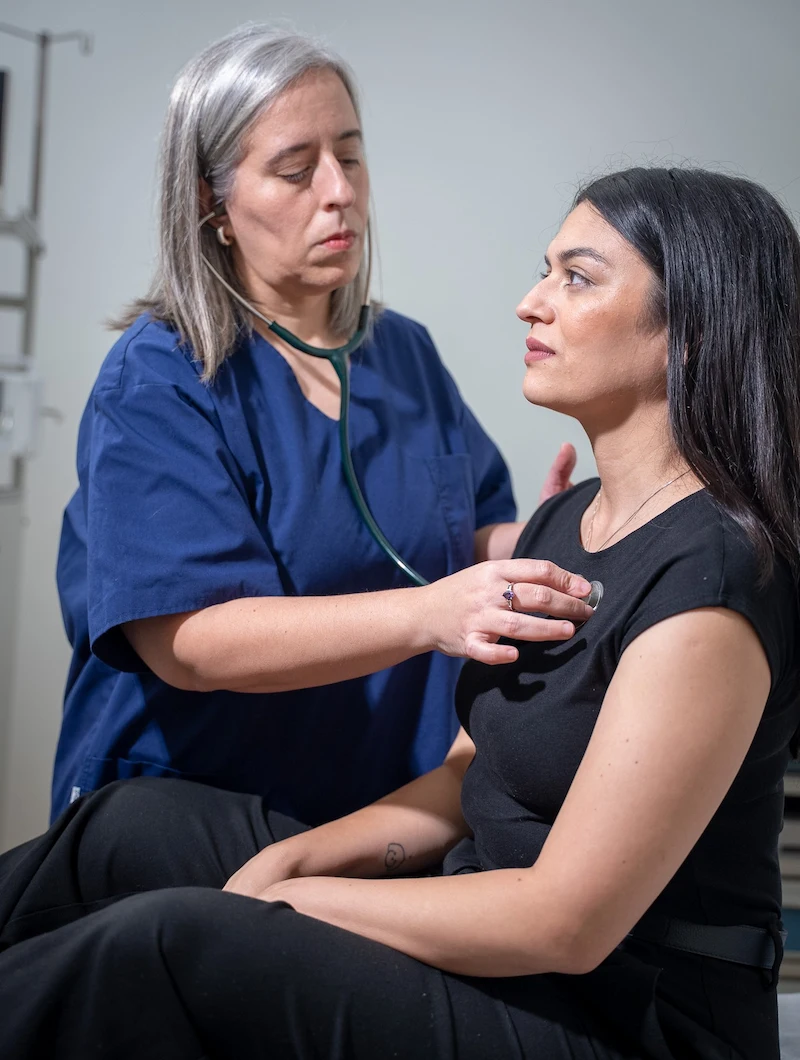
How can it present?
Fatigue and weakness
There may be a persistent feeling of tiredness or a reduced ability to keep up activities that were once done without difficulty.
Shortness of breath
Dyspnea may appear during exertion and, in more advanced cases, also at rest.
Reduced exercise tolerance
Walking, climbing stairs or doing everyday tasks may start to require frequent breaks.
Fluid retention
Progressive swelling may appear in the legs, ankles, feet or abdomen.
Difficulty resting
In some patients, congestion can make shortness of breath worse when lying down and interfere with sleep at night.
A therapy defined by the affected heart tissue.
The heart has its own biological repair mechanisms. However, in the face of significant injuries, previous heart attacks or advanced deterioration of heart function, these mechanisms may not be enough to address the accumulated damage.
The treatment used at LYRACELL combines mesenchymal stem cells obtained from adipose tissue with immune system cells from the blood.
Under the protocols of the Moviglia Method, the LYRACELL team prepares a specific cell therapy, pre-differentiated toward cell types linked to myocardial and vascular tissue, according to the characteristics of the identified impairment.
The immune system cells are part of the process of directing the cell preparation toward the heart structures being treated.
The therapy is administered by intravenous infusion, with the aim of supporting the biological processes associated with the repair and remodeling of damaged tissue and accompanying the functional recovery of the heart.
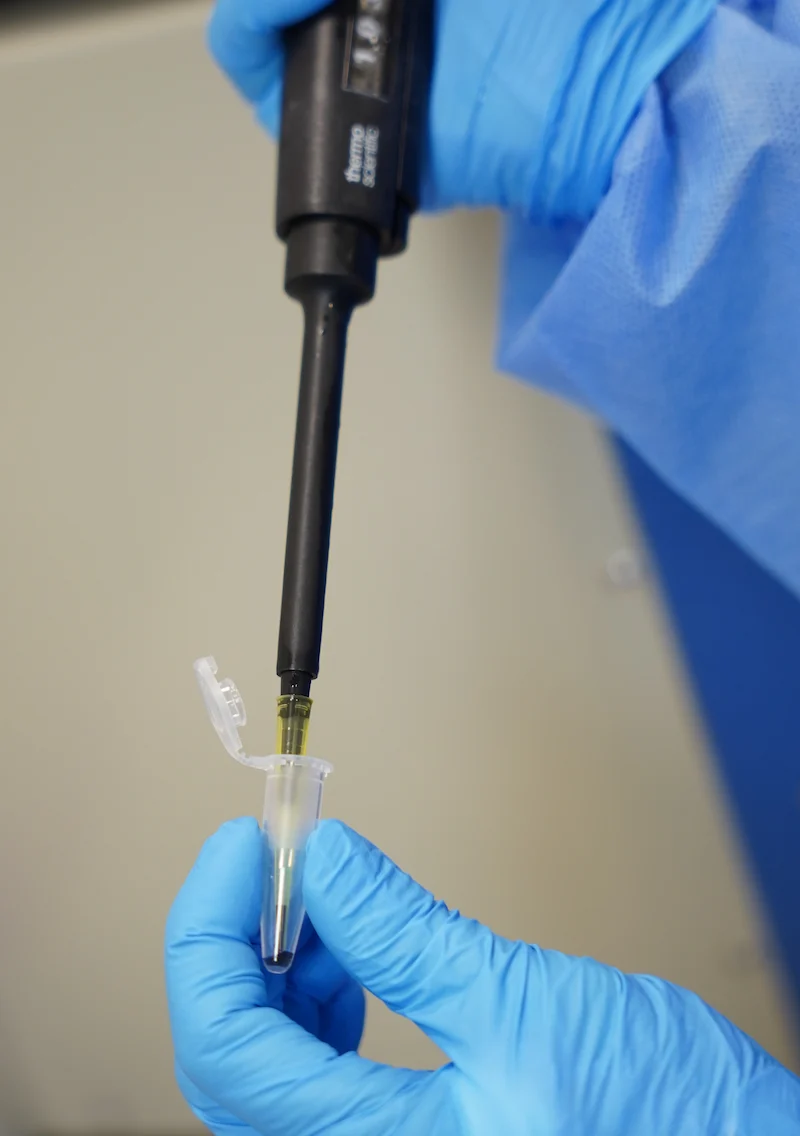
From the laboratory to the heart
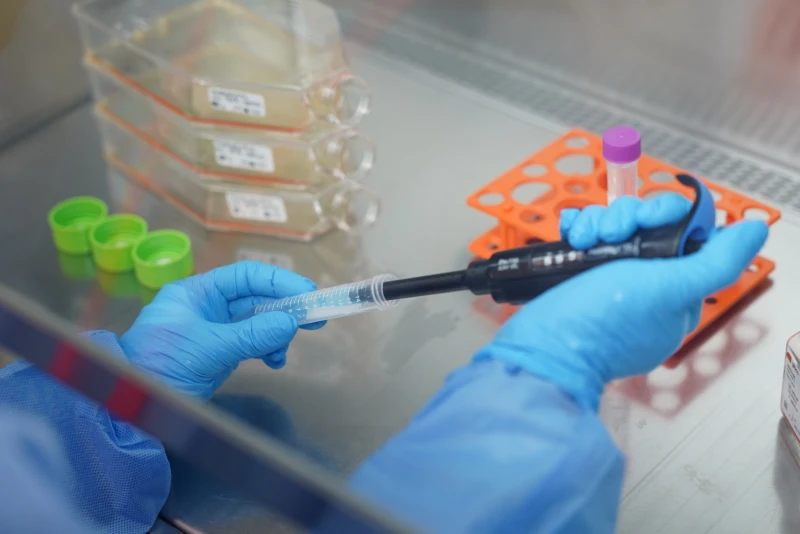
The stem cells are obtained from the patient and, together with the immune system cells, are processed in the laboratory following the protocols of the Moviglia Method. Based on the diagnosis and the degree of impairment of the heart muscle and blood vessels, the LYRACELL team prepares a specific cell therapy. The stem cells pre-differentiated toward lineages linked to heart tissue are combined with specific immune system cells and then administered by intravenous infusion.


Four stages to address the heart based on its structural and functional state.
The treatment is defined according to the origin of the damage, the extent of the affected tissue and the impact on heart function.

1
Evaluation
The medical history and background such as hypertension or previous heart attacks are reviewed. This can be complemented with an echocardiogram, electrocardiogram, cardiac MRI, blood pressure monitoring and laboratory tests, analyzing the ejection fraction and other indicators of the heart’s structure and function.
2
Treatment proposal
The medical team determines the degree of deterioration, the extent of the damage and whether the therapy is appropriate, and defines the cell volume and lineage of the preparation. If the patient is eligible, adipose tissue and blood are collected to process a specific formula.

3
Application
The pre-differentiated stem cells and the specific immune system cells are administered by intravenous infusion. It is a minimally invasive procedure. The number and frequency of applications are determined according to the severity of the clinical condition and the characteristics of each patient.

4
Follow-up
The response to the application is assessed during the first days. This stage is complemented with supervised cardiac rehabilitation and the prescribed medical treatment. Usually, 3 applications over 6 to 12 months are planned, with clinical, functional, laboratory and imaging check-ups.
An accurate evaluation makes it possible to treat the specific problem, not just the symptom.
Could this treatment be an option for you?
The indication is defined individually and requires a structural or organic impairment of the heart that can be demonstrated through diagnostic studies, associated with symptoms and functional limitation.
It may be an option if…
You have fatigue, shortness of breath or reduced exercise tolerance associated with heart failure.
There is a structural impairment of the heart demonstrated by diagnostic studies.
Studies show an alteration in heart muscle function.
You have had a previous heart attack with residual myocardial damage suitable for this approach.
Your physical capacity has gradually decreased as a result of the heart impairment.
You are looking for a treatment defined by the structural and functional state of your heart.
Another approach may be needed if…
There is acute decompensated heart failure that requires immediate stabilization.
There is cardiogenic shock.
There are severe uncontrolled ventricular arrhythmias.
The condition requires urgent life support or a more complex cardiovascular intervention.
The fatigue or shortness of breath has mainly a respiratory origin, such as severe uncontrolled COPD.
There is uncorrected systemic anemia that could explain the symptoms.
The myocardial damage is related to congenital or autoimmune diseases, for which this strategy is not indicated.
Heart studies do not explain the symptoms and another possible origin needs to be investigated.
The indication is defined individually based on the medical evaluation and the corresponding studies.
Treating the heart is part of the process. Supporting its function is too.
In patients with heart failure, follow-up makes it possible to assess how the body responds and how cardiovascular capacity evolves throughout the treatment.
Medical follow-up
The team monitors clinical progress and cardiovascular parameters and assesses any adjustments that may be needed in each patient’s medical treatment.
Cardiac rehabilitation
Supervised cardiac rehabilitation supports the process with a plan adapted to each person’s functional capacity and cardiovascular condition.
Activity is adjusted gradually according to each patient’s progress and tolerance.
Measurable results
Follow-up makes it possible to assess aspects such as exercise tolerance, fatigue, shortness of breath and functional capacity.
Laboratory and imaging studies can also be repeated, including heart function parameters, to objectively compare progress with the starting point.
Frequently asked questions
It is a condition in which the heart cannot pump blood efficiently enough to meet the body’s needs. It may be related to changes in how the heart muscle contracts or relaxes.
It depends on each case. There may be damage to the myocardium, changes in the structure of the chambers and functional alterations that change the heart’s pumping capacity.
Depending on the case, an echocardiogram, electrocardiogram, cardiac MRI, laboratory tests and other cardiovascular studies may be used.
It is one of the parameters used to assess heart function and shows what proportion of blood the ventricle pumps out with each contraction. It should be interpreted together with the other clinical findings and studies.
The base treatment is autologous: the stem cells are obtained from the patient’s own adipose tissue and the immune system cells from their blood. In certain cases, depending on the medical indication, immune system cells from a selected donor may be used.
The cell preparation is administered by intravenous infusion.
Usually, 3 applications over a period of 6 to 12 months are planned. The number is defined at the start of treatment, according to the characteristics of each case, as part of a plan with specific goals. At the end of the plan, progress is assessed and, if needed, further interventions are defined.
Yes. The plan includes supervised cardiac rehabilitation as part of follow-up to support functional and cardiovascular capacity.
Symptoms, functional capacity and cardiovascular parameters are assessed. Laboratory and imaging studies can also be repeated to compare progress with the initial state.
No. These symptoms can also be related to respiratory diseases, anemia or other conditions. The diagnosis requires determining whether there is a heart impairment that explains the symptoms.
The first step is understanding how your heart is working.
Every treatment begins with a medical evaluation to understand the structural and functional state of the heart, determine the origin of the impairment and define which approach may be right for you.