


Cervical spine: cell therapy for cervical spine osteoarthritis.
Persistent pain, stiffness or difficulty moving the neck may be related to structural changes in the cervical spine. These symptoms can affect everyday activities such as driving, working at a screen, holding a posture or sleeping. At LYRACELL we assess the structures involved to identify the origin of the pain and define a personalized treatment.
Personalized cell therapyCT-guidedMinimally invasiveIn-house laboratory
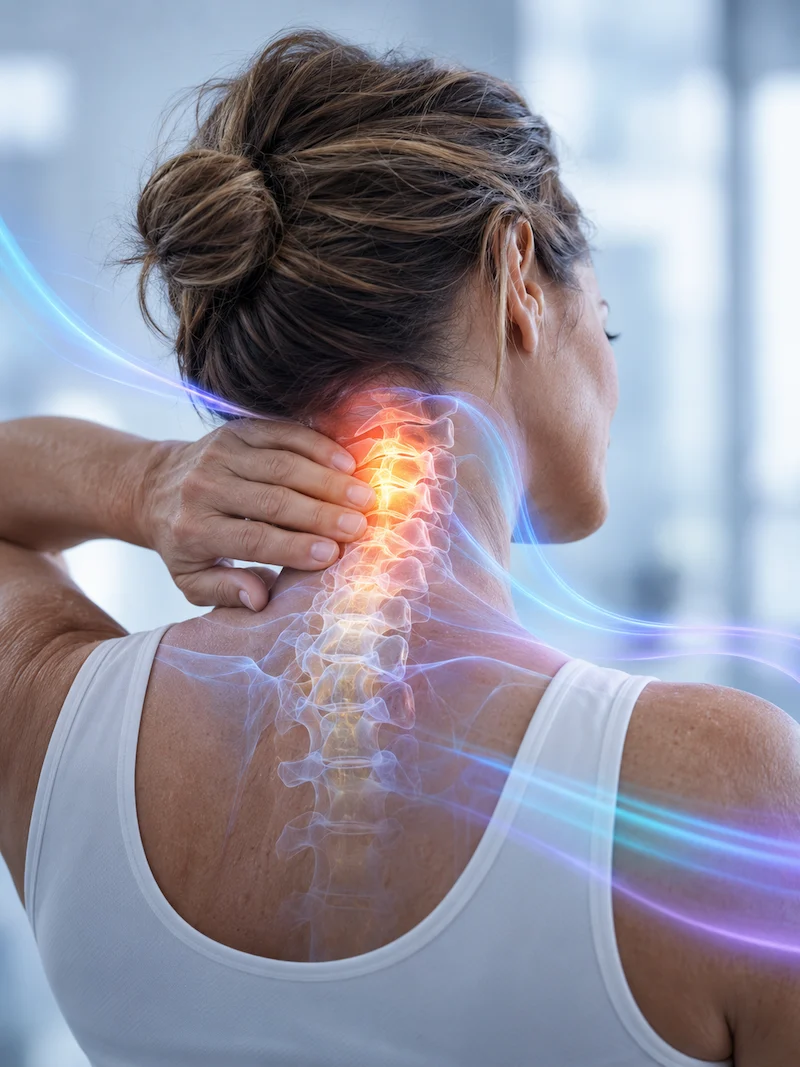
Understanding the cervical spine
The cervical spine is made up of seven vertebrae, separated by intervertebral discs that cushion the load of the head. The facet joints allow the neck to rotate and flex, while the muscles and ligaments contribute to its stability.
Cervical osteoarthritis can affect different structures:
Joint wear and osteophytes
Loss of cartilage in the facet joints can increase friction between the joint surfaces, cause inflammation and lead to the formation of osteophytes, or bone spurs.
Dehydration and loss of disc height
The intervertebral discs can gradually lose water and elasticity. This reduces the space between the cervical vertebrae and can alter how biomechanical loads are distributed.
Stenosis and nerve root compression
Loss of disc height and the presence of osteophytes can narrow the spinal canal or compress the cervical nerve roots that run to the shoulders and arms. This can cause cervicobrachialgia, with radiating pain, tingling or numbness in the arms.
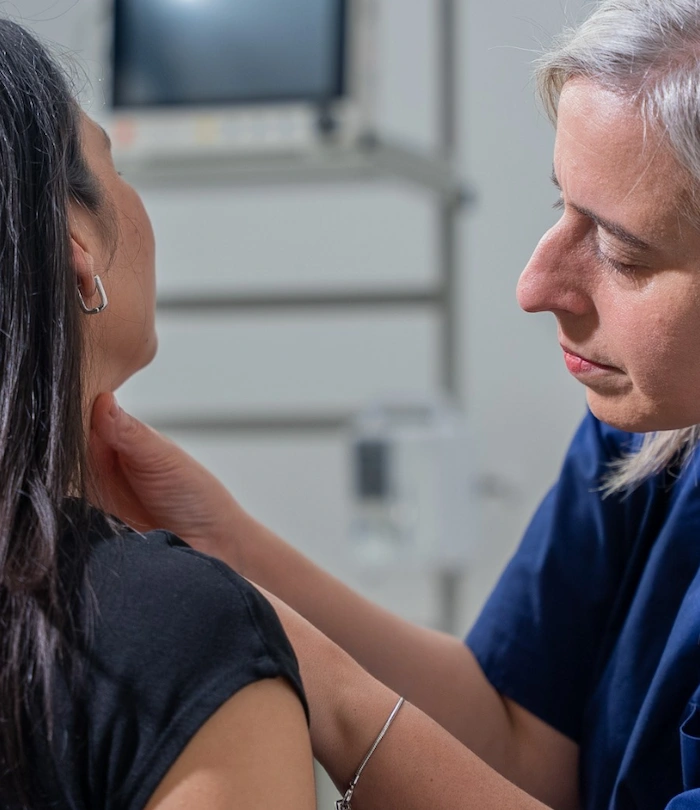
How can it present?
Pain and stiffness
The pain may be persistent or appear with certain movements and come with neck stiffness.
Limited movement
Turning or tilting the head may become more difficult and affect activities such as driving, working at a screen or holding certain postures.
Radiating pain
When there is nerve root compression, the pain can spread from the neck to the shoulder, arm or hand.
Tingling or numbness
Involvement of a nerve root can cause changes in sensation in the arms.
Your own cells, directed toward the structures that need treatment.
The body has natural self-repair mechanisms. However, in the face of trauma such as whiplash, microtrauma associated with sustained postures or changes related to biological aging, that capacity may be insufficient.
In these cases, the contribution of cells aims to support biological processes of tissue repair and remodeling, modulate inflammation and support functional recovery and symptom control.
The personalized treatment combines two key components:
- Stem cells: can help stimulate extracellular matrix synthesis, support the remodeling of connective tissue and protect the remaining cartilage cells.
- Immune system cells: help direct the cell preparation and modulate the inflammatory environment of the affected tissues.
Under the protocols of the Moviglia Method, the LYRACELL team obtains stem cells from the patient’s own fat. These are processed and expanded in the laboratory and then combined with immune system cells from the blood, activated to recognize the spinal structures that need treatment.
The combination of both cell types aims to support the body’s natural repair process, through a personalized approach and under strict safety protocols.
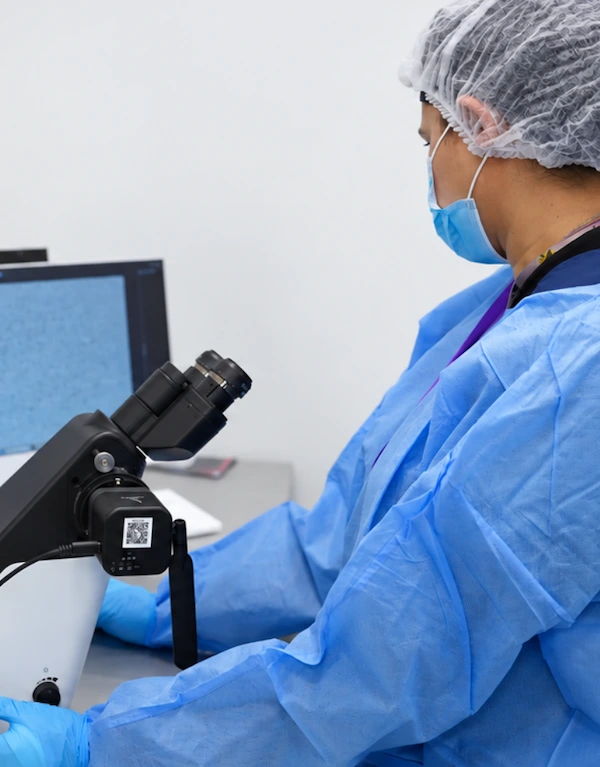
From the laboratory to your cervical spine
The cells are processed in the laboratory and prepared according to the structures identified in the diagnosis before their localized, CT-guided application.

Four stages, a process defined for each case.
From the initial evaluation to following up on your progress, each stage of treatment is defined by the medical team according to your case.
1
Evaluation
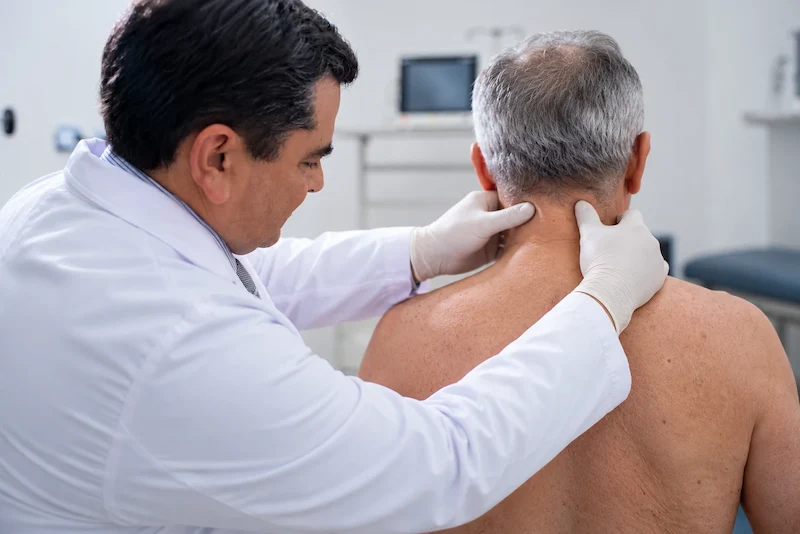
The medical history, background, posture, biomechanical loads and how long the pain has been present are analyzed. Studies may include cervical X-rays and MRI and, if appropriate, CT and electromyography, to identify the affected structures and the degree of involvement.
2
Treatment proposal
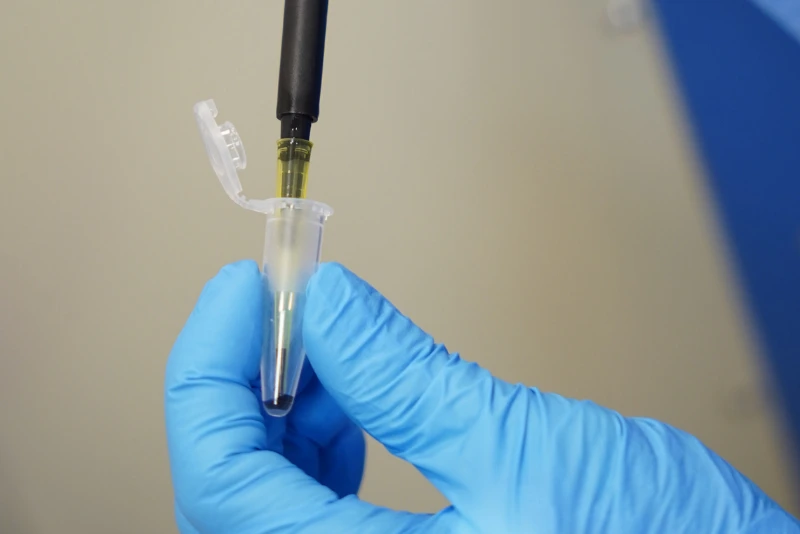
The medical team assesses whether cell therapy is appropriate. If the patient is eligible, adipose tissue and peripheral blood are collected, and the cell combination is prepared in the laboratory according to the cervical structures identified in the evaluation.
3
Application
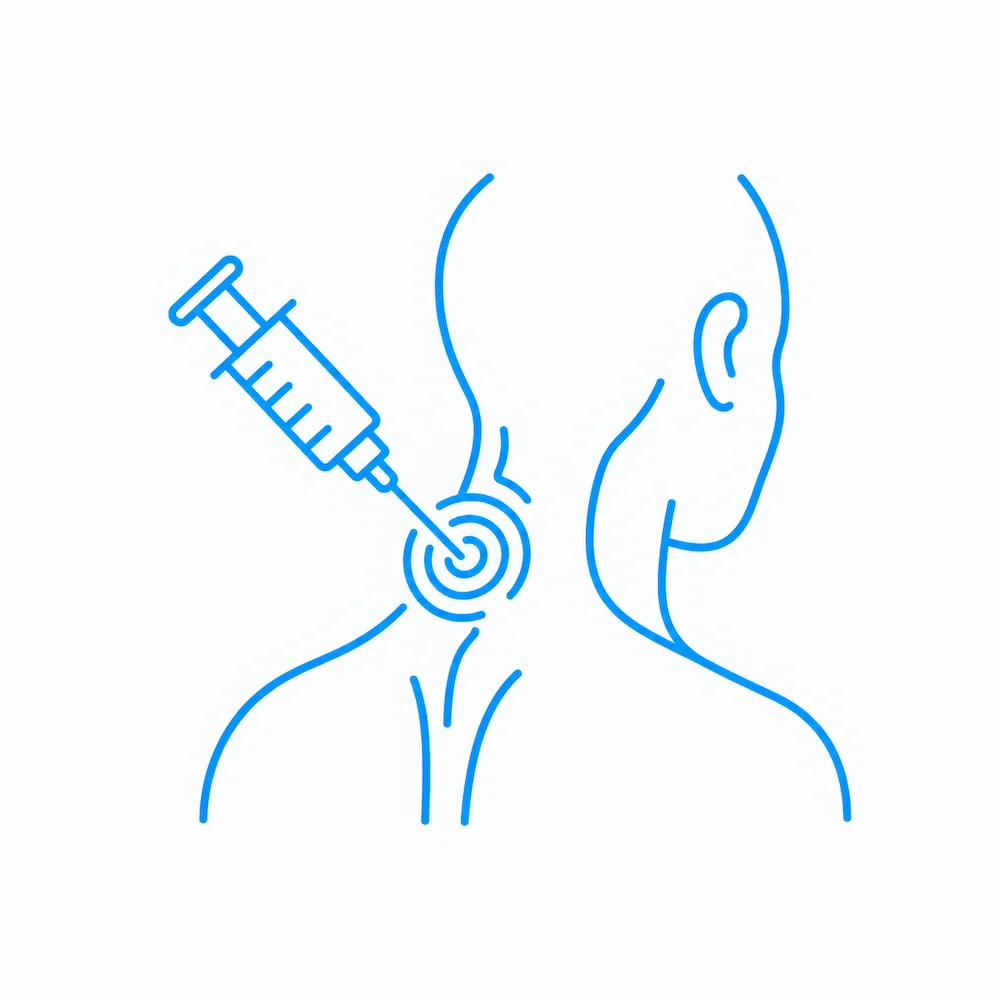
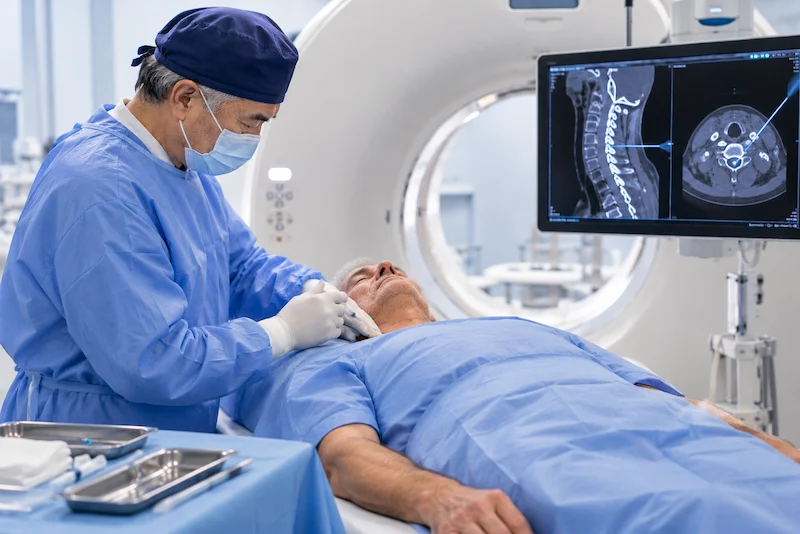
The procedure is minimally invasive: a localized, CT-guided injection into the intervertebral discs and other structures defined according to the diagnosis. The number and frequency of applications are determined according to the severity of the condition and the clinical progress.

4
Follow-up
At first there may be discomfort at the application sites. Progress is assessed through the check-ups defined by the medical team. Physical therapy and postural retraining can help strengthen the neck, trapezius and shoulder girdle, and improve cervical biomechanics.
An accurate evaluation makes it possible to treat the specific problem, not just the pain.
Could this treatment be an option for you?
The indication is defined individually and requires joint or disc involvement that can be demonstrated through diagnostic studies.
It may be an option if…
You have persistent neck pain or functional limitation associated with cervical spine osteoarthritis.
Stiffness or loss of mobility affects your everyday, work or physical activities.
Your studies show structural joint or disc involvement.
You have symptoms associated with degenerative changes in the cervical spine.
You have a herniated disc with persistent pain or limitation.
You want to preserve cervical spine function and act on signs of structural deterioration.
Another approach may be needed if…
There is severe cervical myelopathy or acute neurological involvement, with serious motor impairment in the arms or legs, gait problems or critical spinal cord compression requiring immediate decompressive surgery.
The pain is associated with a recent vertebral fracture.
Studies identify a spinal infection, such as discitis or osteomyelitis.
There is a tumor in the spine.
The indication is defined individually based on the medical evaluation and the corresponding studies.
Treating the structures is part of the process. Working on biomechanics is too.
After the application, the medical team defines a care, follow-up and rehabilitation plan according to the structures treated and each patient’s progress.
First days
Temporary local discomfort may occur at the application sites. The medical team indicates the necessary care and any temporary changes in activity.
Rehabilitation and postural retraining
Physical therapy and postural retraining can support the process by strengthening the stabilizing muscles of the neck, the trapezius and the shoulder girdle, and gradually working on cervical biomechanics.
Measurable results
Clinical and functional check-ups make it possible to assess changes in pain, range of motion and function. When indicated, new studies can be added to compare the condition of the treated structures with the starting point.
Frequently asked questions
Cervical osteoarthritis can affect the intervertebral discs and the facet joints. Degenerative changes can also reduce the space available for the spinal canal or the nerve roots and cause symptoms that radiate to the arms.
The evaluation combines the medical history and physical exam with diagnostic studies. Depending on the case, X-rays, MRI, CT and electromyography may be used.
The base treatment is autologous: the stem cells are obtained from the patient’s own adipose tissue and the immune system cells from their blood. In certain cases, depending on the medical indication, immune system cells from a selected donor may be used.
The application is performed through a localized injection into the structures defined by the medical team, under CT guidance.
The number of applications is defined at the start of treatment, according to the severity of the condition, as part of a plan with specific goals. At the end of the plan, progress is assessed and, if needed, further interventions are defined.
It can be part of the recovery plan. Physical therapy and postural retraining make it possible to work on the stabilizing muscles of the neck, the trapezius, the shoulder girdle and cervical biomechanics.
Severe cervical myelopathy, critical spinal cord compression with acute neurological involvement, a recent fracture, an infection or a tumor require a different type of evaluation and approach.
The first step is understanding your case.
Every treatment begins with a medical evaluation to understand your diagnosis, your studies and your goals, and determine which approach may be right for you.