


Shoulder: cell therapy for rotator cuff injuries and joint wear
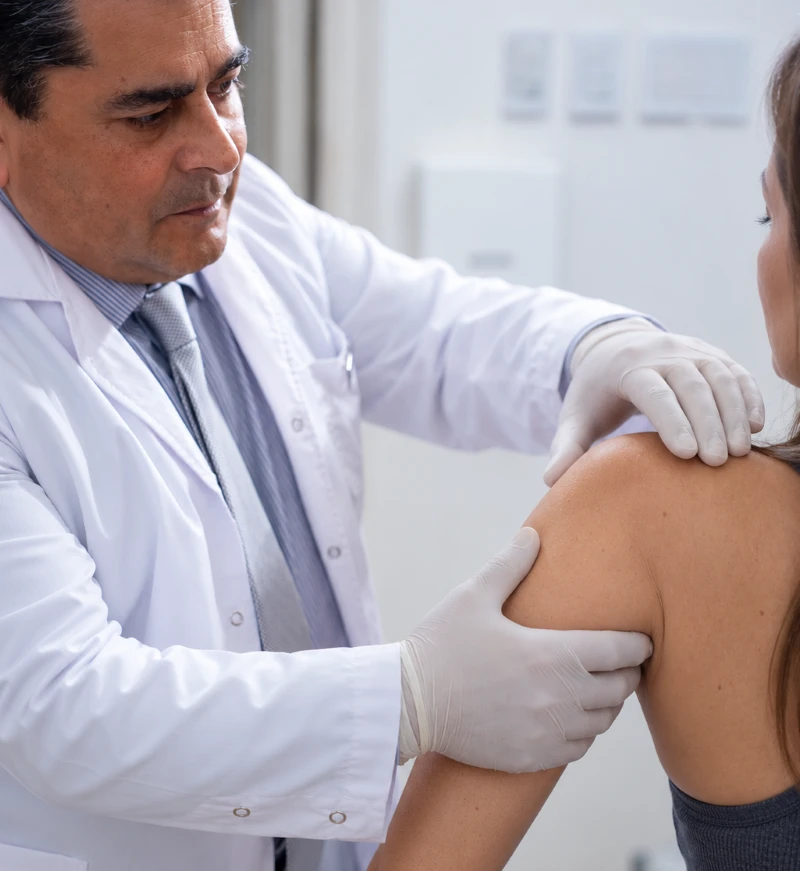
Shoulder pain is one of the most common reasons for seeing a doctor. It can appear suddenly after an impact, a fall or a sudden movement, or develop gradually due to overuse, microtrauma or repetitive wear. At LYRACELL we assess the condition of your shoulder to identify the structural cause of the pain and define a personalized treatment.
Personalized cell therapyUltrasound-guidedMinimally invasiveIn-house laboratory

Understanding the shoulder
The shoulder is one of the most mobile joints in the body. It is made up of two joints: the glenohumeral joint, which connects the humerus to the scapula, and the acromioclavicular joint. It also includes a group of muscles and tendons known as the rotator cuff. These structures work together to provide movement, stability and strength.
The pain may mainly be due to two causes:
Joint wear
Deterioration of the cartilage and bone can create irregularities and areas of friction inside the joint. A labral tear may also occur.
Rotator cuff injury
The tendons can wear down gradually or suffer an acute tear. When a tendon loses its attachment point, the muscle can lose strength, stop working properly and, over time, atrophy.
How can it present?
Pain when lifting or rotating the arm
Discomfort may appear when raising the arm above the shoulder, reaching back or making rotating movements.
Loss of strength
Involvement of the rotator cuff tendons can make tasks such as lifting, pushing or holding objects more difficult.
Stiffness or limited movement
Joint wear can gradually reduce the shoulder’s range of motion.
Clicking or a feeling of instability
When there is a labral tear, certain movements can cause clicking or a feeling of reduced control over the joint.
Limits on sports or daily life
Getting dressed, combing your hair, reaching for something overhead or playing a sport that demands the arm may start to become difficult.
Your own cells, directed toward the tissue that needs treatment.
The body has natural self-repair mechanisms. However, in the face of serious injuries or persistent wear, that capacity may be insufficient. In these cases, the contribution of cells aims to support biological processes related to tissue repair and remodeling, and to support pain relief and the recovery of mobility.
The personalized treatment combines two key components: stem cells, part of a preparation intended to support biological processes related to tissue repair and remodeling, and immune system cells, which help direct the stem cells toward the tissue that needs treatment —cartilage, tendon or bone, as appropriate—.
Under the protocols of the Moviglia Method, the LYRACELL team obtains stem cells from the patient’s own fat. These are selected and expanded at LYRACELL Lab, LYRACELL’s in-house laboratory. Once ready, they are combined with tissue-specific immune system cells.
The combination of both cell types aims to support the body’s natural repair process, through a personalized approach and under strict safety protocols.
From the laboratory to your shoulder
The cells are processed at LYRACELL Lab, LYRACELL’s in-house laboratory, following the protocols of the Moviglia Method. There, the LYRACELL team prepares a specific cell therapy directed toward the tissue identified in the diagnosis, before its targeted application to the area to be treated.

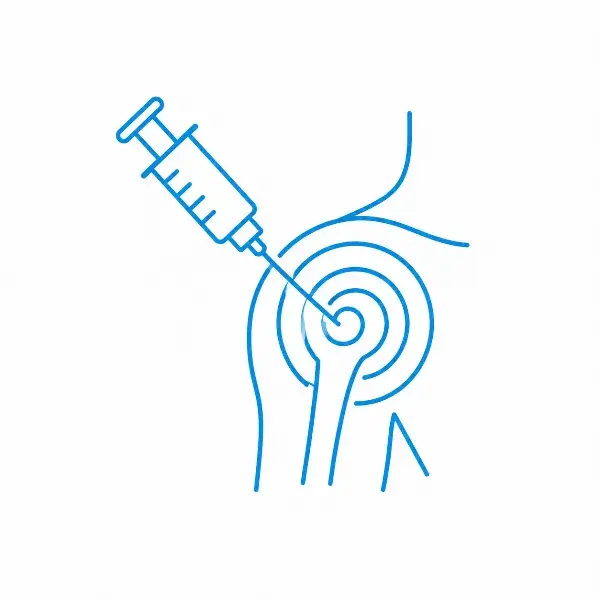
Four stages, a process defined for each case.
From the initial evaluation to following up on your progress, each stage of treatment is defined by the medical team according to your case.

1
Evaluation
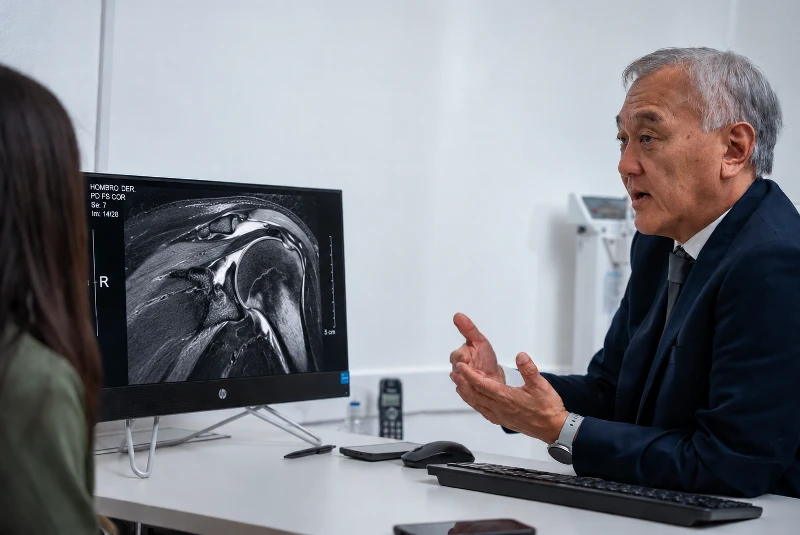
The medical history, habits and imaging studies —ultrasound, X-rays, CT scans or MRIs— are analyzed to understand the condition of the shoulder, identify the affected structures and determine which tissues could benefit from treatment.
2
Treatment proposal
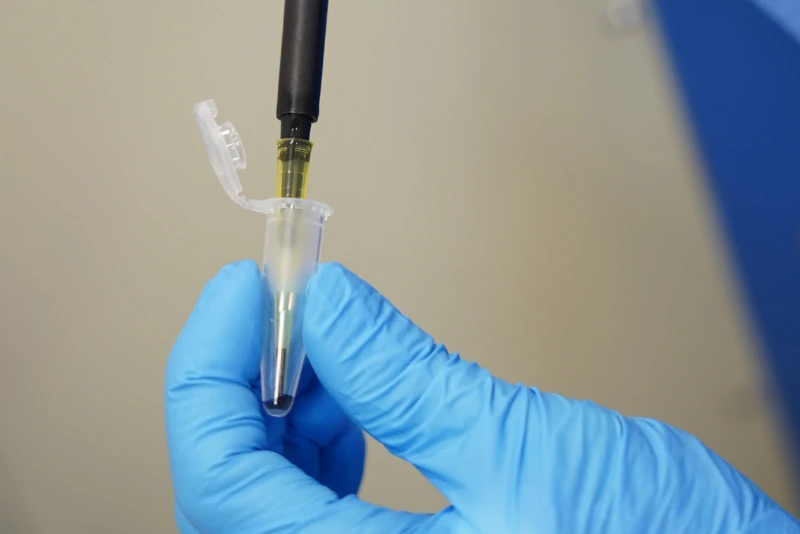
If the patient meets the eligibility criteria, a personalized plan is designed. Fat —adipose tissue— and blood are collected to obtain the stem cells and immune system cells. The necessary combination is prepared in the laboratory according to the characteristics of the injury.
3
Application
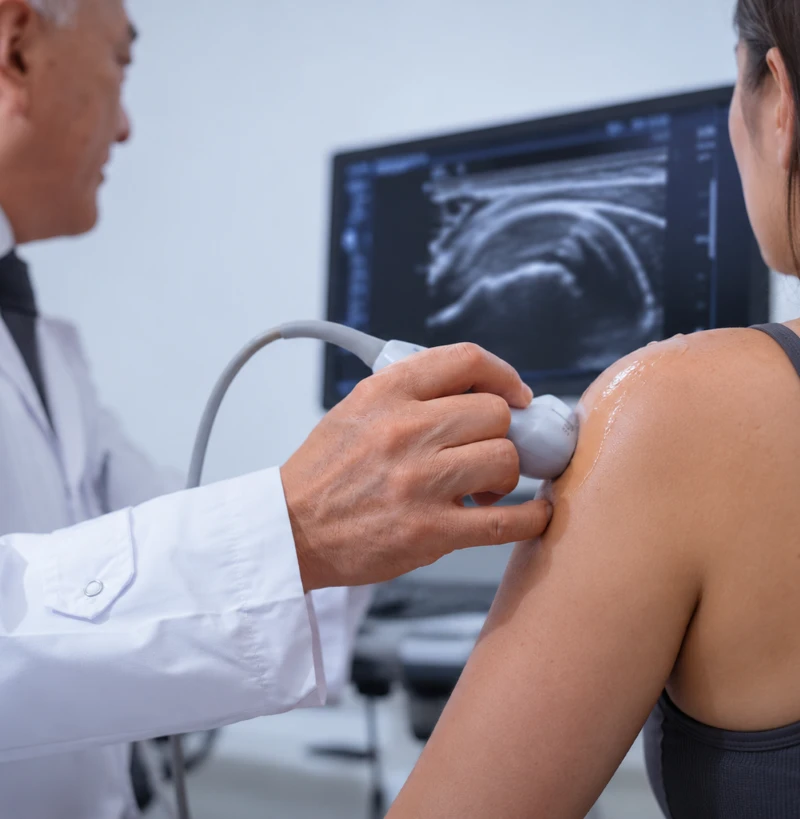
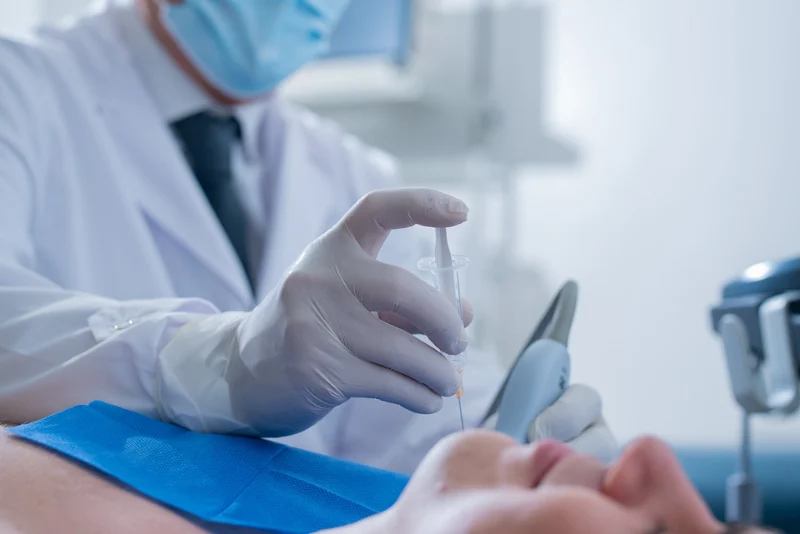
The procedure is minimally invasive and precise. The cell preparation is administered to the injured area with real-time ultrasound guidance. If the injury requires prior surgery to repair the tendon, the application can be performed during or after it, supporting healing. The number of applications depends on the severity.
4
Follow-up
Mild discomfort may occur during the first days. Progress is assessed at later medical check-ups. Physical rehabilitation can support this stage by strengthening the muscles and recovering range of motion. Months later, clinical, functional and imaging check-ups are carried out to assess progress.
An accurate evaluation makes it possible to treat the specific problem, not just the pain.
Could this treatment be an option for you?
The indication is defined individually based on the medical evaluation, the symptoms and imaging studies.
It may be an option if…
You have persistent pain that affects your everyday, work or sports activities.
You have lost mobility or strength.
Your medical studies show structural damage.
You want to preserve shoulder function and act on early signs of wear.
In some severe cases, surgery may be needed to stabilize the joint before or together with the cell application.
Another approach may be needed if…
The pain or functional limitation has a neurological origin or comes from the cervical spine.
The indication is defined individually based on the medical evaluation and the corresponding studies.
Images that make it possible to compare progress.
Follow-up images make it possible to compare the condition of the shoulder before treatment and at later check-ups. They correspond to a specific case: the response, timing and degree of progress vary from patient to patient.
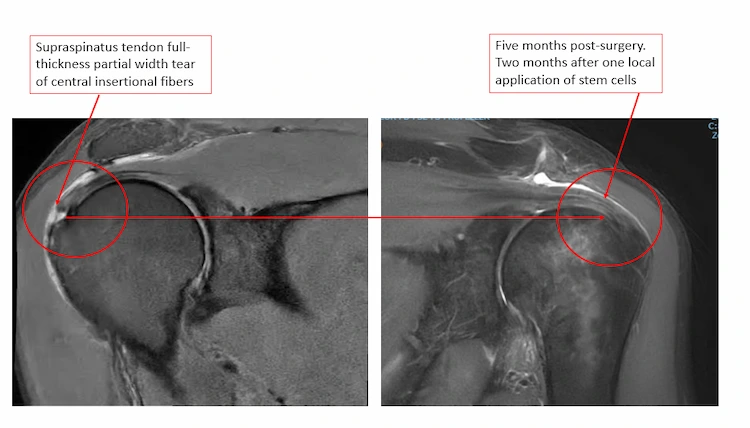
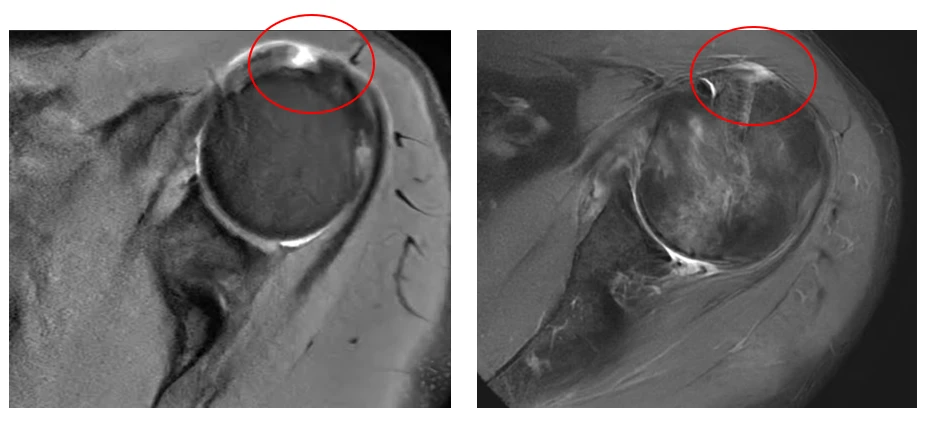
A 61-year-old patient with a tear of the supraspinatus tendon in the left shoulder. The patient underwent surgery to repair the tendon and, as a complement, received 1 local application of stem cells to stimulate healing. Comparing the MRIs before and after, we found:
- Repaired, continuous tendon: the first study shows a gap in the tendon, right where it attaches to the bone. Five months after surgery, and just two months after the application, the tendon appears reattached to the bone with no gaps.
- Good integration of the repair: the operated area shows a firm bond between the tendon and the bone.
- Recovery in a short time: just 2 months after the application, the tendon already shows complete continuity.
These results show a very favorable recovery of the tendon, combining surgery with regenerative treatment.
Results may vary from person to person. Each case is evaluated individually.
Treating the tissue is part of the process. Restoring how the shoulder moves is too.
After the application, the medical team defines a follow-up and rehabilitation plan adapted to the tissue treated, the type of injury and the activities each patient needs to get back to.
First days
Temporary local discomfort or inflammation may occur. The medical team indicates the necessary care and how to temporarily adapt activities.
Recovering mobility and strength
Physical rehabilitation supports the process by working on the shoulder’s range of motion and strength.
Depending on the type of injury, the plan may include gradual strengthening of the rotator cuff and the muscles that stabilize the scapula, as well as the movements linked to everyday, work or sports activities.
If the treatment was combined with surgery, rehabilitation is adapted to the healing times indicated by the medical team.
Measurable results
Follow-up makes it possible to assess aspects such as pain, mobility, strength and shoulder function.
When indicated, new imaging studies can be performed to compare the condition of the treated structures with the starting point.
Frequently asked questions
It depends on the diagnosis. Rotator cuff injuries, tendinopathies, joint wear, labral tears and traumatic injuries are evaluated. The goal is to determine whether cell therapy can be part of the approach in each case.
It is one of the conditions most frequently evaluated. The indication depends on the grade of the injury, the tissue affected and its impact on shoulder function, and is always defined after a medical evaluation.
The base treatment is autologous: the stem cells are obtained from the patient’s own adipose tissue and the immune system cells from their blood. In certain cases, depending on the medical indication, immune system cells from a selected donor may be used.
The medical team reviews your medical history, your symptoms and imaging studies, such as ultrasound, X-ray or MRI. Based on that evaluation, it defines whether cell therapy can be part of the treatment or whether another approach is better.
Yes. The cells are applied with ultrasound guidance, directed to the area where the injury was identified.
In some cases it can be an alternative to surgery. Complete tears, extensive injuries or serious trauma may require surgery. In those cases, the cells can be applied during or after the procedure as a complement, not a replacement.
It depends on the type of injury and each patient’s progress. During the first days the team provides specific care instructions and then gradually defines the rehabilitation plan. There is no single timeframe.
The return is gradual. It is defined according to clinical progress and the medical team’s instructions.
Through clinical check-ups and a functional assessment of pain, mobility and strength. When appropriate, imaging studies are also used. The results are compared with the starting point.
If the diagnosis points to another approach, including surgery, the team will let you know and guide you on the next steps. Shoulder pain can also originate in the cervical spine or have a neurological origin. The evaluation makes it possible to tell the difference.
It is a developing field of research. Results vary depending on the type of injury and the protocol used. That is why each indication starts from an individual diagnosis and is accompanied by follow-up with measurable parameters.
The first step is understanding your case.
Every treatment begins with a medical evaluation to understand your diagnosis, your studies and your goals, and determine which approach may be right for you.