


Elbow: cell therapy for epicondylitis and osteoarthritis.
Elbow pain can appear after an injury or develop gradually from repetitive movements in sports, work or everyday activities. At LYRACELL we assess the joint, tendons and ligaments to identify the origin of the damage and determine whether cell therapy can be part of a personalized treatment.
Personalized cell therapyImage-guidedMinimally invasiveIn-house laboratory

Understanding the elbow
The elbow connects the humerus, ulna and radius in a structure that allows the arm to bend and straighten and is involved in rotating the forearm.
Its joint surfaces are covered with cartilage and stabilized by the medial and lateral collateral ligaments. Around it work muscle groups such as the biceps and triceps, as well as the flexor-pronator and extensor-supinator muscles of the forearm, which attach through their tendons.
An injury can affect just one of these structures or several at the same time.
Joint wear and damage
Cartilage deterioration, osteochondral lesions, bone edema and osteophyte formation can disrupt how the joint works and cause pain, friction and limited movement, even in areas such as the olecranon.
Ligament injuries and instability
The collateral ligaments can be stretched or partially or completely torn. When they lose their ability to stabilize the joint, movement can become less efficient and put more strain on other structures of the elbow.
Tendon injuries
The tendons that attach around the elbow are especially exposed to repetitive movements and overload.
Common injuries include lateral epicondylitis, or “tennis elbow”, and medial epicondylitis, known as “golfer’s elbow”. The distal attachments of the biceps and triceps can also be affected, with tendinosis or tears of varying degrees.
In some cases, the damage is not limited to a single structure. A persistent problem can change the mechanics of the elbow and cause secondary changes in other tissues.

How can it present?
Pain when using force
Lifting, pushing, pulling or gripping an object can cause discomfort in different areas of the elbow.
Pain with repetitive movements
Certain work or sports activities can trigger or worsen the symptoms.
Loss of strength
Involvement of the tendons, ligaments or the joint itself can make tasks that require arm or forearm strength more difficult.
Limited movement
Joint damage can gradually reduce the elbow’s range of flexion or extension.
Feeling of instability
When there is ligament involvement, certain movements can create a feeling of reduced control or stability in the joint.
A therapy defined by the tissue that needs treatment.
The elbow can have damage in structures with different biological characteristics. That is why treatment begins by determining whether the involvement is in the cartilage, bone, tendons, ligaments or several structures at the same time.
The treatment combines mesenchymal stem cells obtained from adipose tissue with immune system cells from the blood.
Under the protocols of the Moviglia Method, the LYRACELL team processes the cells in the laboratory and prepares a specific combination according to the type of tissue affected —cartilage, tendon, ligament or bone, according to each diagnosis—.
The stem cells are part of a preparation intended to support biological processes related to tissue repair and remodeling. The immune system cells help direct the preparation toward the structures being treated.
The preparation is applied directly to the structures identified during diagnosis, with the aim of supporting the functional recovery of the elbow.
The combination of both cell types aims to support the body’s natural repair process, through a personalized approach and under strict medical and safety criteria.
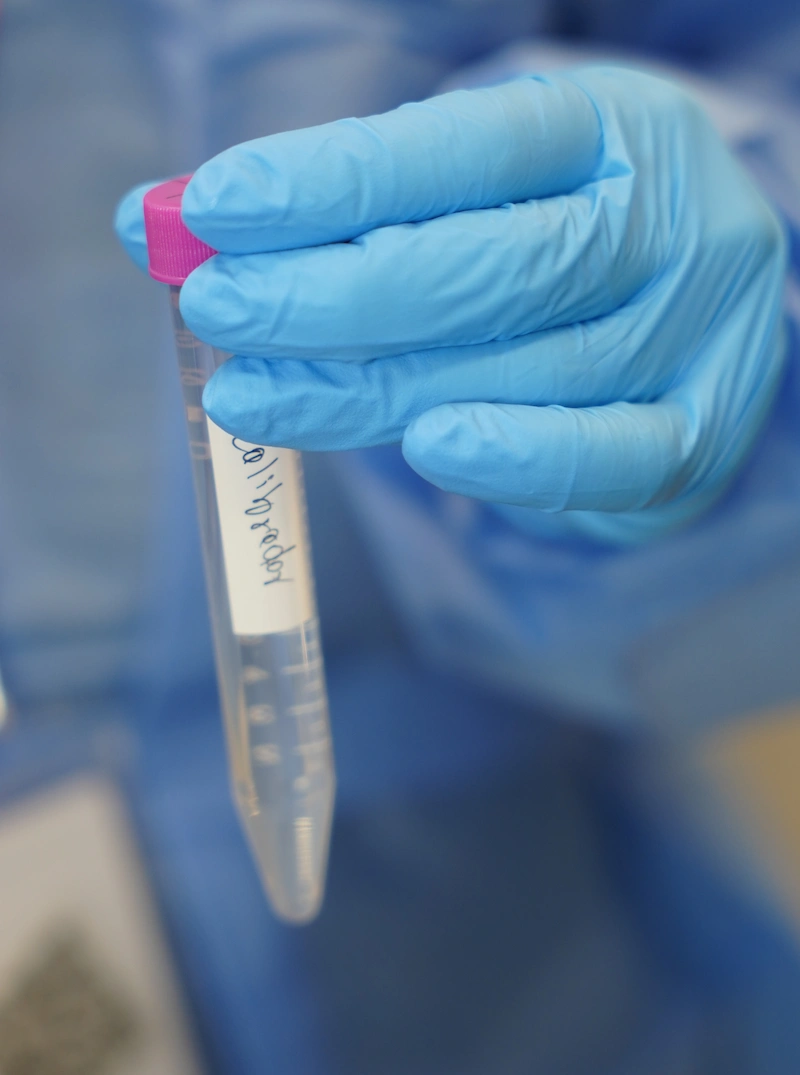
From the laboratory to the elbow
The stem cells are obtained from the patient and, together with the immune system cells, are processed in the laboratory following the protocols of the Moviglia Method. Based on the diagnosis, the LYRACELL team prepares a cell combination adapted to the affected structures before its targeted application to the joint, tendons, ligaments or bone, according to the characteristics of each case.


Four stages to treat the elbow based on its diagnosis.
Each treatment is defined according to the origin of the pain, the structures involved and the degree of damage identified.
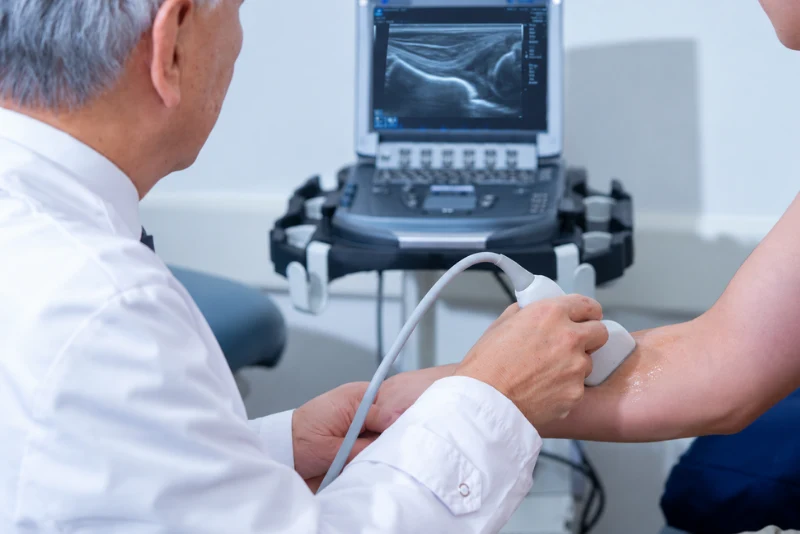
1
Evaluation
The symptoms, any history of trauma and the sports or work activities that cause overload are reviewed. As appropriate, this is complemented with X-rays, ultrasound, MRI or CT to identify the affected structures and the extent of the damage.
2
Treatment proposal
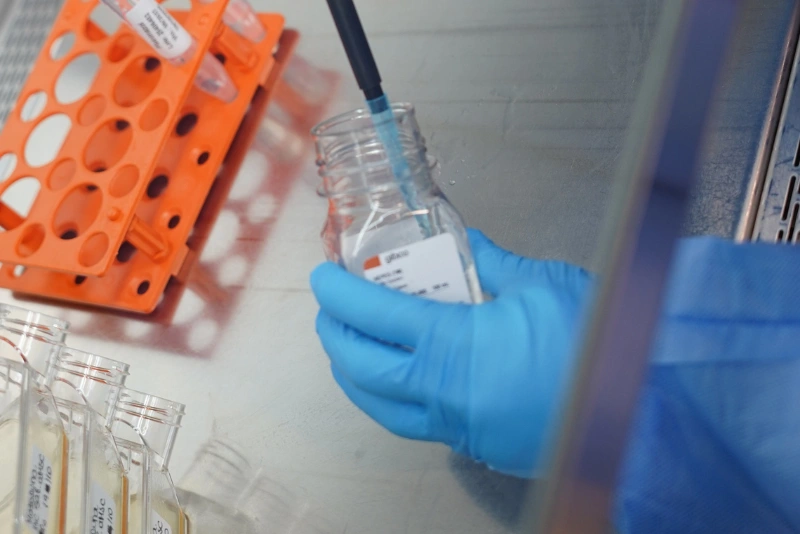
The medical team determines whether cell therapy may be appropriate and defines the tissues to treat and the preparation. If the patient is eligible, adipose tissue and peripheral blood are collected, and a combination adapted to the affected tissue is processed in the laboratory.
3
Application
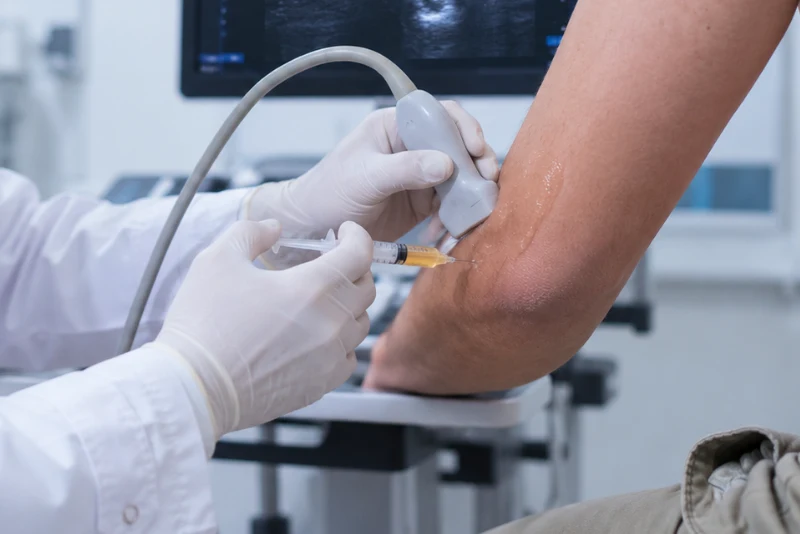
The preparation is applied to the affected structures: the joint, tendons —lateral or medial epicondyle, or biceps or triceps attachments—, ligaments or bone. If the injury requires surgery, it can be added during or after it. The number of applications depends on each case.

4
Follow-up
Temporary local discomfort or inflammation may occur during the first days. Physical rehabilitation supports the recovery of movement and strength in the arm and forearm. Depending on the condition, two or three applications over 6 to 12 months may be planned, with clinical, functional and imaging check-ups.
An accurate evaluation makes it possible to treat the specific problem, not just the pain.
Could this treatment be an option for you?
The indication is defined based on the symptoms, the medical evaluation and the presence of a structural problem that can be demonstrated through imaging studies.
It may be an option if…
You have persistent pain or functional limitation in the elbow.
There is a tendon injury associated with repetitive movements or overload.
You have lateral or medial epicondylitis with measurable structural involvement.
There is joint or osteochondral damage or degenerative changes identified through imaging studies.
You have a ligament injury suitable for this approach.
There is involvement of the distal biceps or triceps attachment.
You have lost strength or mobility and this is starting to limit everyday, work or sports activities.
You want to address the affected structures and recover function, beyond controlling the symptoms.
Another approach may be needed if…
There is very advanced osteoarthritis, with severe loss of joint alignment and continuous bone-on-bone contact.
There is extreme ligament instability that requires mechanical repair.
A complete, retracted tendon tear is identified that requires surgical treatment.
The pain originates in another area, such as the shoulder.
The symptoms have a neurological origin, such as cervical radiculopathy or entrapment of the ulnar or radial nerve at the elbow.
Elbow studies do not explain the symptoms and another possible origin needs to be investigated.
The indication is defined individually based on the medical evaluation and the corresponding studies.
Treating the structure is part of the process. Restoring how the elbow works is too.
After the application, the medical team defines a follow-up and rehabilitation plan adapted to the tissue treated, the grade of the injury and the activities each patient needs to get back to.
First days
Temporary local discomfort or inflammation may occur. The medical team indicates the necessary care and how to temporarily adapt activities.
Recovering mobility and strength
Physical rehabilitation supports the process by working on the range of motion and strength of the arm and forearm.
Depending on the type of injury, the plan may include gradual strengthening of the biceps, triceps and flexor and extensor muscles, as well as recovering the movement patterns linked to everyday, work or sports activities.
It may also be necessary to review the technique, ergonomics or repetitive movements that contributed to the injury in order to reduce the strain on the treated tissues.
Measurable results
Follow-up makes it possible to assess aspects such as pain, mobility, strength and elbow function.
When indicated, new imaging studies can be performed to compare the condition of the treated structures with the starting point.
Frequently asked questions
The pain can originate in different structures. There may be involvement of the cartilage and bone of the joint, the tendons or the ligaments. That is why identifying the origin of the damage is necessary before defining treatment.
Lateral epicondylitis affects the tendons that attach to the outer part of the elbow. It is usually related to overload and repetitive movements and does not occur only in people who play tennis.
Medial epicondylitis affects the tendons that attach to the inner part of the elbow. It can also be related to repetitive movements during sports or work activities.
Depending on the case, the evaluation may be complemented with X-rays, ultrasound, MRI or CT to determine which structures are affected and the extent of the injury.
The base treatment is autologous: the stem cells are obtained from the patient’s own adipose tissue and the immune system cells from their blood. In certain cases, depending on the medical indication, immune system cells from a selected donor may be used.
The preparation and the application site are defined according to the affected structures. Under the protocols of the Moviglia Method, the LYRACELL team adapts the cell combination to the type of tissue that needs treatment.
Depending on the diagnosis, they can be applied to the joint space, bone, tendons or affected ligaments.
Depending on the severity of each case, two to three applications over a period of 6 to 12 months may be planned. The number is defined at the start of treatment, as part of a plan with specific goals. At the end of the plan, progress is assessed and, if needed, further interventions are defined.
Some severe injuries, such as certain complete tendon tears or ligament injuries, may need surgical repair. In those cases, cell therapy can be added during or after the procedure, as medically indicated.
Yes. Rehabilitation can help recover mobility and strength and work on the movement patterns or overload factors related to the injury.
No. Some symptoms may come from the shoulder, cervical radiculopathy or involvement of nerves such as the ulnar or radial nerve. If elbow studies do not explain the symptoms, other possible causes need to be investigated.
The first step is identifying which structure is causing the pain.
Every treatment begins with a medical evaluation to determine whether the involvement is in the joint, tendons, ligaments, bone or several structures at the same time, and to define which approach may be right for you.